Skip to Content
 Aurélien Pasquier

“Sustainable performance begins when we stop selling objects to deliver useful value.”

Aurélien Pasquier
Consultant · Conférencier
Aurélien Pasquier helps organizations shift from a volume-based logic to a usage-based logic thanks to the « Economy of Functionality and Cooperation » (EFC). A recognized entrepreneur and speaker, he illustrates his ideas with concrete cases from responsible digital practices, industry, and the circular economy. Through his conferences, he invites leaders and managers to reinvent their economic models, their modes of cooperation, and their leadership.

Aurélien Pasquier

Aurélien Pasquier is a consultant and speaker specialized in new sustainable economic models, recognized for his ability to connect economic performance and environmental responsibility. At the intersection of the academic, entrepreneurial, and territorial worlds, he has been supporting leaders and organizations in their strategic transformation for over fifteen years. His approach, both pragmatic and visionary, is based on the idea that it is possible to reconcile competitiveness, innovation, and positive impact. An expert in the "Economy of Functionality and Cooperation" (EFC), he advocates a vision where value no longer lies in the sale of products, but in the delivery of performance of use. Trained by major figures in this field, he has contributed to structuring work with ADEME and various regional actors. For him, EFC is not an abstract theory but a concrete lever for transforming businesses and territories.

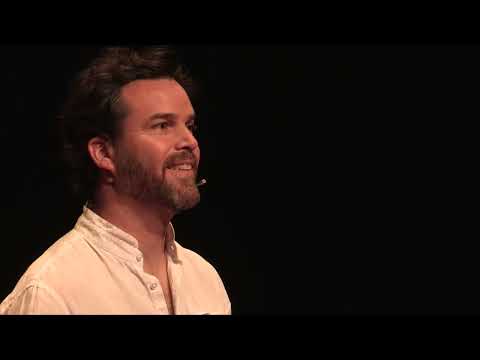
Entrepreneur since 2002, he founded the agency "Everest", a pioneer of responsible digital practices in France, notably through the development of "Nanosites", low-tech and eco-designed websites. After selling Everest to the "Useweb" group, he continued his commitment by co-founding "Adaptable Upcycling", a company dedicated to the reuse and transformation of office furniture, aligned with a circular and social economy logic. A respected speaker on national stages, he has given over 150 conferences in ten years and was invited to TEDx Lorient, where he presented "The Secrets of a Virtuous Economic Model". He regularly participates in forums like the "GreenTech Forum" at Station F, as well as in regional events dedicated to industry, innovation, and ecological transition.

His style is both counter-intuitive, pedagogical, and inspiring: he enjoys challenging conventional ideas, illustrating his points with concrete cases, and engaging his audience in collective reflection. Whether addressing leaders, managers, engineers, or elected officials, he emphasizes actionable tools and clear thinking frameworks, particularly around effectuation, coopetition, and efficiency. Beyond his interventions, Aurélien Pasquier advocates for a more sustainable, cooperative, and resilient economy. He believes that the transition will not happen solely through technology but through a transformation of mindsets, economic models, and governance modes. Through his conferences, he invites each organization to become a participant in a durable, innovative, and human future.

Contact with Us

Contacting us for more information or for requesting a speaker.

Reinventing the economic model: from selling products to performance in usage!

  • Many companies continue to think in terms of sales volumes while ecological challenges demand a different logic. This conference proposes to change paradigms by shifting from a possession economy to a use economy.
  • Based on the framework of the 'Functionality and Cooperation Economy', Aurélien Pasquier shows how organizations can create more value with fewer resources. He illustrates his point with concrete examples from industry, services, and responsible digital.
  • Beyond concepts, he explains how to rethink customer relationships, the billing model, and the value chain. The goal is to build more resilient, profitable, and sustainable models in the long term.
  • In conclusion, he invites leaders to experiment with new approaches, to cooperate with their ecosystems, and to measure performance beyond just financial growth.

Effectuation: entrepreneuring in uncertainty!

  • In an unstable and unpredictable world, planning is no longer enough: one must learn to act with what they have. This conference introduces the principles of effectuation as a method of entrepreneurial action.
  • Aurélien Pasquier shows how to leverage your resources, network, and skills to create opportunities rather than waiting for the ideal moment. He illustrates this mindset with concrete stories from his journey.
  • He explains how effectuation can be utilized by both start-ups and large companies or communities. This approach fosters agility, learning, and responsible innovation.
  • At the end of the conference, the audience leaves with simple tools to test ideas, reduce risks, and make progress step by step in uncertain environments.

Coopetition: turning conflict into a performance driver!

  • In many sectors, traditional competition has reached its limits in the face of environmental and social challenges. Coopetition offers an alternative: collaborating with competitors on certain key issues.
  • Aurélien analyzes how tensions between stakeholders can become levers of innovation rather than obstacles. He shows that conflict, when well managed, can be constructive and creative.
  • He presents examples where companies have pooled resources, shared data, or co-developed sustainable solutions. These practices strengthen collective competitiveness without undermining individual performance.
  • The conference concludes with concrete avenues for establishing cooperation dynamics in environments marked by competition.

Responsible digital: doing better with less!

  • Digital technology is often presented as immaterial, but it has a considerable environmental impact. This conference questions how companies design their digital tools.
  • Aurélien Pasquier draws on his experience with Nanosites to demonstrate that a more sustainable web can be both efficient and profitable. He explains the principles of digital eco-design.
  • He shows how to reduce the carbon footprint of IT systems without sacrificing user experience. The challenge is to reconcile technical efficiency and ecological responsibility.
  • Participants leave with actionable recommendations to rethink their digital strategy and integrate sustainability as a competitive advantage.

Essential: Rethink Leadership!

  • Many leaders perceive themselves as indispensable, risking exhausting their teams and themselves. This conference deconstructs this myth with clarity and kindness.
  • Aurélien Pasquier offers a vision of leadership based on trust, delegation, and collective intelligence. He shows that making an organization less dependent on its leaders is a strength.
  • Through concrete examples, he explains how to structure teams, clarify responsibilities, and encourage autonomy. This approach enhances both effectiveness and well-being at work.
  • In conclusion, he invites leaders to move from a controlling stance to a facilitative stance, more suited to contemporary challenges.

Réinventer le business pour concilier valeur et limites planétaires

Aurélien Pasquier montre pourquoi les modèles économiques fondés sur le volume sont devenus insoutenables. Il introduit l’Économie de la Fonctionnalité et de la Coopération comme alternative crédible et rentable. Un talk pédagogique et inspirant qui relie stratégie, écologie et performance durable.

Dans les coulisses de l’Économie de la Fonctionnalité

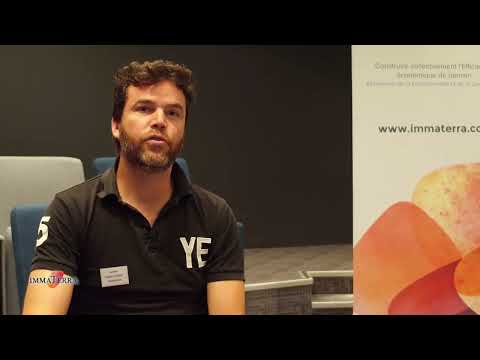
Aurélien Pasquier revient sur ses premières expérimentations en EFC et sur ses enseignements de terrain. Il éclaire les conditions de réussite d’un modèle basé sur l’usage et la coopération. Un témoignage précieux pour comprendre l’EFC au-delà de la théorie.

Pourquoi nos modèles économiques doivent changer maintenant ?

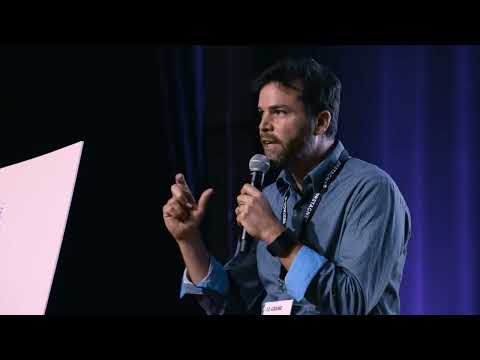
Aurélien Pasquier met en perspective les limites du capitalisme fondé sur la consommation. Il plaide pour des modèles plus sobres, collaboratifs et résilients. Une intervention engagée, claire et accessible sur les grandes transformations économiques.

Let's dare to change the economic model!

  • In a context of ecological, social, and technological transitions, many economic models are showing their limits. This workshop invites participants to take a step back from their current model in order to identify its fragilities, inconsistencies, and structural tensions. It aims to open a space for clear and courageous strategic reflection.
  • Aurélien Pasquier highlights the paradoxical injunctions faced by organizations: growth and sobriety, performance and engagement, profitability and responsibility. These tensions, often endured, become leverage points for thinking differently about value creation.
  • Participants then identify invisible or under-exploited value areas: relational assets, non-monetized know-how, positive externalities, territorial resources. The objective is to reveal potentials that are already present but insufficiently activated.
  • The workshop concludes with the emergence of initial concrete transformation pathways, tailored to the context of each organization. Leaders, CODIR members, managers, and entrepreneurs leave with a clarified vision and operational levers to engage in the evolution of their model.

From performance to robustness!

  • Short-term performance has long structured strategic decisions. However, in an unstable environment, robustness becomes a key criterion for sustainability. This workshop invites a shift in perspective: moving from a logic of immediate optimization to a logic of durable solidity.
  • Aurélien Pasquier analyzes the fragilities of the dominant model: excessive dependencies, financial vulnerabilities, human tensions, supply chain disruptions, or loss of meaning. This shared diagnosis allows for awareness of systemic risks that are often invisible in daily life.
  • A collective effort then identifies the levers of resilience: diversification of resources, territorial cooperation, team engagement, more distributed governance. Robustness is addressed in its economic, human, and territorial dimensions.
  • Finally, participants translate these reflections into concrete and priority decisions. Leaders, managers, and transforming teams leave with a realistic action plan to strengthen the solidity and adaptability of their organization.

Cooperate differently to create value!

  • Cooperation is not just a relational posture; it can become a true economic lever. This workshop explores how collective dynamics, both internal and external, can generate new forms of value.
  • Aurélien Pasquier creates a mapping of stakeholders: collaborators, partners, clients, suppliers, and territorial actors. This visualization helps to understand interdependencies and identify strategic points of convergence.
  • Participants then analyze existing cooperations and those that are still potential. Which partnerships should be strengthened? What alliances should be imagined? Which synergies can be activated to pool resources and innovate more effectively?
  • Concrete cases and situational exercises allow for moving from intention to action. Companies, networks, collectives, and territorial organizations leave with operational leads to transform cooperation into a sustainable competitive advantage.

Raison d’être, usage et impact !

  • La raison d’être ne peut se limiter à une déclaration d’intention. Elle doit devenir une véritable boussole stratégique, capable d’orienter les choix et d’inspirer l’action. Cet atelier vise à clarifier cette raison d’être et à la rendre pleinement opérante.
  • Aurélien Pasquier travaille sur son articulation avec les usages réels proposés aux clients, usagers ou bénéficiaires. L’enjeu est de relier impact sociétal, utilité concrète et modèle économique, afin d’éviter le décalage entre discours et pratique.
  • Les participants analysent comment l’impact peut devenir générateur de valeur : différenciation stratégique, fidélisation, attractivité des talents, ancrage territorial. L’objectif est d’intégrer l’impact au cœur de la création de valeur.
  • L’atelier se conclut par une priorisation d’actions réalistes et alignées avec la mission de l’organisation. Dirigeants, équipes projet, acteurs de l’ESS et collectivités repartent avec une feuille de route claire pour incarner leur raison d’être dans leurs décisions quotidiennes.