“A free voice that combines philosophical rigor and civic courage to reconcile Islam, freedom, and modernity.”
Razika Adnani
Razika Adnani
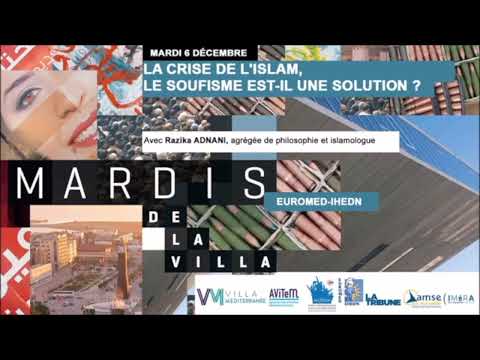
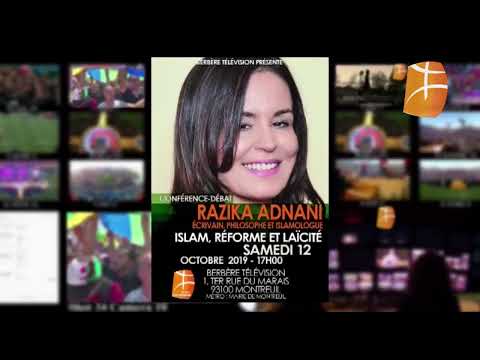
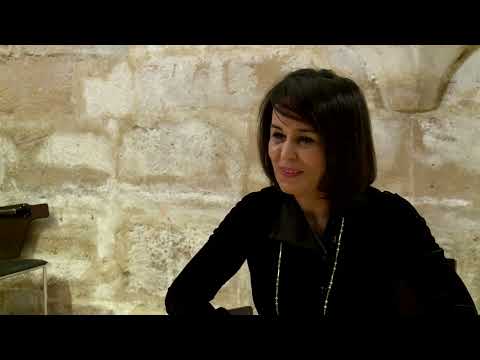
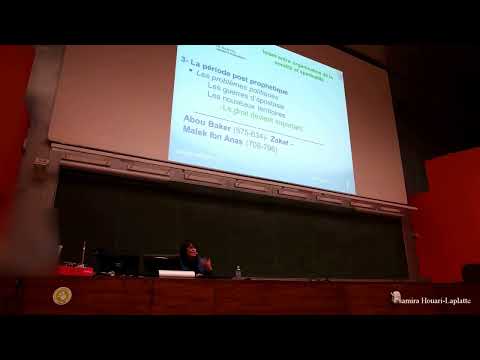
Razika Adnani is a Franco-Algerian philosopher, Islamologist, and writer, recognized for her work on the reform of Islam and her critical reflection on contemporary Muslim thought. Graduated in philosophy from the University of Algiers, she taught this discipline until 2005 before dedicating herself entirely to research and writing. Early on, she engaged in an intellectual struggle aimed at liberating Islam from the domination of the past and Salafist doctrines. For her, "patriarchal, archaic, even violent Islam proposed to Muslims is not a fatality and that nothing prohibits, from a religious point of view, Muslims from building another Islam more compatible with our time and the values of humanism."
Author of several works that have become references, she published in Arabic "The blockage of reason in Muslim thought (2011)", then "The necessary reconciliation (2013)", which analyzes violence and identity crisis among Maghreb populations. In 2017 appeared "Islam: what problem? The challenges of reform", where she forges structuring concepts like "revealed Islam" and "constructed Islam". Her more recent publications include "Secularism and Islam, possible mission?" (2019), "Not to give in" (2021), and "Getting out of Islamism" (2024).
Her analyses intersect philosophy, theology, and social sciences. She emphasizes the necessity of a reform oriented towards the future to distinguish it from those that are directed towards the past. A reform that takes into account the demands of modernity rather than constantly seeking legitimization in the past. She thus criticizes the so-called "Islamic" feminism, which she considers an intellectual imposture, and denounces the veil as an instrument devoid of true Quranic foundation. She critiques the concept of Islamism as it is forged in France and considers it one of the factors in the rise of political and conservative Islam. Her thought and commitment are distinguished by the fact that they do not only raise the problems posed by Islam in our current societies but also propose solutions and avenues for exit.
In addition to her activity as a writer, Razika Adnani is a member of several intellectual and citizen instances. She has sat on the Steering Committee of the Foundation of Islam of France (2017–2024), on the Scientific Council of the Civic Center for Religious Studies (CCEFR), on the analysis group JFC Conseil, and is an honorary member of the Euromed-IHEDN association. She is also the founder and president of the International Days of Philosophy of Algiers, which brings together researchers and thinkers around contemporary debates.
Highly engaged in civil society, she collaborates with the French Ministry of Justice, notably for training professionals in charge of radicalized youth, as well as with the Ministry of the Interior. She regularly appears in the media (France 24, France Culture, Le Point, La Croix, HuffPost Maghreb, Marianne, etc.) and participates in numerous conferences in France, Algeria, Belgium, and Quebec.
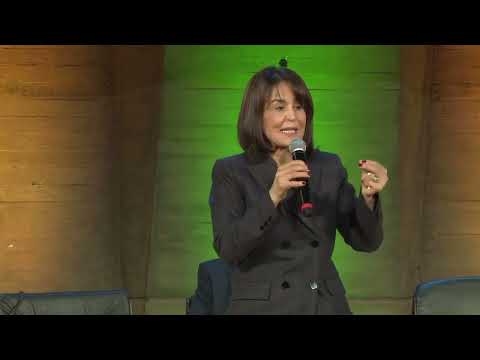
An essential figure in the debate on Islam, secularism, and the place of women, Razika Adnani is recognized for her clarity, frankness, and intellectual rigor. Her lectures, always accessible and enriched with historical and Quranic references, are so many pleas for critical thinking, freedom of conscience, and modernity. Today, she embodies an independent and essential voice in the dialogue between cultures and in the reflection on the future of Muslim societies. Razika Adnani is the laureate of the Science and Secularism 2025 award given by the Laïcité République Committee.
Reforming Islam to break the deadlock!
- The reform of Islam has been a recurring topic for over two centuries, but it has never been fully realized. Today, the rise of Salafism and Islamism in France and elsewhere makes this question more urgent than ever.
- Razika Adnani shows that these movements are not a consequence of integration difficulties, but rather a major cause of the blockages. They convey a rigid vision that confines believers to an archaic reading of the texts.
- She emphasizes the collective responsibility of Muslim intellectuals and the importance of separating religion and politics to give Islam a spiritual vocation.
- This conference sheds light on the challenges of reform and proposes concrete avenues to help Islam reconnect with modernity.
Muslim Thought: From Blocked Reason to Liberated Reason!
- The question of thought as a source of knowledge has marked Muslim history since the death of the prophet. Early on, the rationalism embodied by the muʿtazilites was fought against and marginalized, leading to a lasting defeat of reason.
- Razika Adnani retraces this intellectual journey and shows how the sidelining of philosophy and rationality has fostered literalism and fundamentalism.
- Even today, Muslim thought suffers from this "blockage of reason," which prevents an awareness of the inconsistencies that exist in Islam as presented to Muslims in order to consider a possibility of overcoming them.
- This conference explores the necessary conditions to rejuvenate rational and creative Muslim thought.
Islam and secularism: mission possible?
- In France, as elsewhere, secularism provokes passionate debates when it intersects with the question of Islam. Some see it as a threat, others as an opportunity.
- Razika Adnani reminds us that secularism is not a rejection of religion, but a legal and political framework that allows for freedom of conscience and peaceful coexistence.
- She questions the responsibility of Muslim intellectuals in the failure to fully appropriate this principle, while emphasizing the necessity of a renewed religious discourse that can only exist with a new theology.
- This conference opens a dialogue about the conditions of inclusive secularism, compatible with Muslim societies.
The identity issue in the Maghreb and its repercussions!
- Islam has played a decisive role in shaping the identity of the Maghreb, but it has also generated political and social blockages.
- Razika Adnani analyzes how religious instrumentalization has served both as a legitimization for power and as resistance against external influences.
- This ambivalence continues to feed identity crises that manifest as violence, governance difficulties, and an ambiguous relationship with modernity.
- The conference offers a critical reading of the history and the perspectives for reconciliation of Maghreb populations with their history and origins to build more stable and inclusive societies.
Consciousness in the face of violence!
- Violence has traversed human history and has often been justified by religion or ideology.
- Razika Adnani shows that in Muslim societies, certain doctrines have contributed to 'moralizing' violence by justifying it as legitimate.
- She questions the moral conscience, which is supposed to guide men and women toward good, but too often defaults in the face of violence.
- This conference offers a philosophical and ethical reflection on ways to deconstruct the discourses that legitimize violence and to reconstruct a culture of peace.