“Decide quickly, act correctly, learn always!”
Philippe Laumet
Philippe Laumet
Former Air Force fighter pilot, instructor, lead pilot of the ambassador patrol Ramex Delta on Mirage 2000, then airline pilot, Philippe Laumet combines operations, aerial demonstrations, and the transmission of methods derived from cockpits (safety, CRM, briefing/debriefing) in the service of teams in business. He is presented as a recognized expert in aviation safety and CRM and was decorated for an exemplary military aviation career (Cross of Military Valor, Medal of Aeronautics).
His story is rooted in the demands of flying in formation faced with strong time constraints in complex operational environments: number of participants, threats, uncertainties. In this context, the safety and success of a mission depend on a quick and accurate decision, clear communication, and capitalizing on every previous experience through uncompromising debriefings. As the leader of the Ramex Delta demonstration patrol, he delivers high-level presentations at French and European meetings, where precision and mutual trust are paramount. Engaged in NATO operational theaters, he participates in demanding allied missions where establishing an atmosphere of reliability and credibility is crucial.
Having transitioned to air transport, he enhances his expertise in flight safety and CRM, this body of methods that make groups safer and more efficient under pressure. His intervention style: direct, operational, focused on pragmatic and accessible tools. Within the Chibane collective (Cockpit-based strategy), he addresses five themes (leadership, cohesion, performance, stress, risk) in three formats (keynote, workshop, VR immersion/simulator). The ambition: to make situational awareness, decision-making loops, and team rituals tangible.
On the agency side, A-Speakers references him in leadership/motivation with a biography sheet, themes, and video teaser; he is found in the selections "Aviation," "Team Spirit," "Motivation." His credo can be summed up in three words: simple, safe, efficient. At high speed as in business transformation, the quality of the briefing, the definition of roles, and the alignment of crews make the difference between a mediocre action and a successful mission.
Decide quickly and well: clarity under pressure
- At high speed, waiting for certainty means missing the decisive moment. In the cockpit of a fighter jet, as in a boardroom, the quality of a decision depends not on the quantity of information available, but on the clarity of intent: defined objectives and priority management. Philippe Laumet reveals the mechanisms that allow for accurate decision-making in uncertainty by structuring thought around a simple, understandable, and immediately actionable intention.
- He shares the operational principles derived from combat aviation: the OODA loop (Observe, Orient, Decide, Act), explicit Go/No-Go criteria, pre-prepared alternative plans, and a clear gradation of responsibilities.
- These tools help reduce cognitive load and speed up decision-making without sacrificing rigor. Speed ceases to be a risk factor when it is based on a solid, shared method.
- Through situational scenarios inspired by his cockpits, he demonstrates how to clarify collective intent, manage ambiguity, and coordinate decisions in a complex environment. This approach translates directly to management committees, project teams, or rapidly changing environments where the ability to decide early is a major competitive advantage.
- Participants leave with an immediately operational framework: formalization of intent, prioritization of options, definition of alert thresholds, and debriefing rituals. Deciding quickly does not mean taking reckless risks: it is, on the contrary, creating the conditions for clarity before action.
Mastering risks: turning mistakes into sustainable performance
- In aviation, errors are never denied or stigmatized: they are analyzed, understood, and integrated into a continuous learning process. Philippe Laumet introduces the principles of Just Culture, a model that promotes transparency and transforms every incident into an opportunity for collective improvement.
- He presents the concrete tools used in aviation: Threat and Error Management (TEM), Crew Resource Management (CRM), successive safety barriers, explicit stop rules, and factual debriefings. This approach allows for a clear distinction between individual responsibility and system functioning, creating an environment where everyone can report a risk without fear.
- From real cases, he shows how to identify weak signals, interrupt a degraded sequence before it becomes critical, and capitalize on experience to enhance organizational resilience. This logic allows for a shift from a reactive culture to a proactive culture.
- In the workplace, the benefits are immediate: reduction of incidents, improvement in reliability, acceleration of collective learning, and reinforcement of trust. Mastery of risks is not a hindrance to performance: it constitutes its sustainable foundation.
Patrol cohesion: achieving pinpoint execution
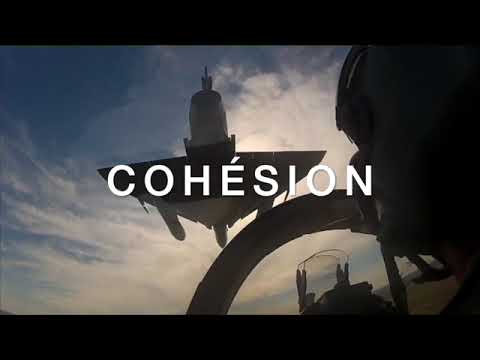
- At 900 km/h, cohesion is not an abstract quality: it relies on a precise system of communication, clearly defined roles, and shared standards. Philippe Laumet unveils the mechanisms that allow a patrol to function as a single entity, capable of acting with precision and fluidity in the most demanding environments.
- He explains how a common operational language, short communication protocols, and regular synchronization points help to avoid friction and maintain perfect coordination. Standardizing the fundamentals frees up attention and allows everyone to focus on creating value.
- This methodology applies directly to teams in business: complex projects, matrix organizations, sales or technical teams. By clarifying responsibilities, structuring interactions, and synchronizing actions, teams gain efficiency and serenity.
- The result is tangible: fewer misunderstandings, smoother execution, and an enhanced ability to act quickly in critical situations. Cohesion becomes a concrete, reproducible, and sustainable operational advantage.
Manage stress & cognitive load: stay clear-headed when everything speeds up!
- Pressure is a constant in high-responsibility environments. The difference between performance and error does not lie in the absence of stress, but in the ability to manage it effectively. Philippe Laumet shares the techniques used by fighter pilots to maintain their clarity in the most demanding situations.
- He shares simple and powerful tools: techniques for mastering one's abilities, priority management, strategic micro-breaks, and clear distribution of roles. These practices help stabilize attention, prevent cognitive overload, and maintain decision quality.
- Through realistic cases, he demonstrates how to regain control in situations of information saturation, avoid distraction, and maintain a clear view of priorities. This ability to "zoom out" is a key skill in modern environments, characterized by urgency and complexity.
- Participants leave with immediately applicable protocols to strengthen their resilience and that of their teams. Sustainable performance is based on a structured mental and operational hygiene.
Standards that free: pragmatic operational excellence!
- Contrary to popular belief, standards do not limit performance: they make it possible. In aviation, procedures help reduce uncertainty, safeguard actions, and unleash the capacity for adaptation where it is truly needed.
- Philippe Laumet explains how to design useful and pragmatic standards: short checklists, structuring rituals, explicit responsibilities, and continuous improvement loops. These tools help reduce unnecessary variability and increase overall reliability.
- He shows how to transform existing rituals — briefings, meetings, debriefings — into levers of learning and performance. This approach allows for an accelerated collective progress without burdening the processes.
- Organizations that adopt these principles gain in efficiency, clarity, and autonomy. Standards become performance catalysts, enabling teams to give their best in a secure framework.