Skip to Content
 Frédéric Encel

“Frédéric Encel translates geopolitical complexity into lucid decisions: borders, conflicts, powers — without simplifying, without yielding.”

Frédéric Encel

Professor · Speaker · Geopolitician
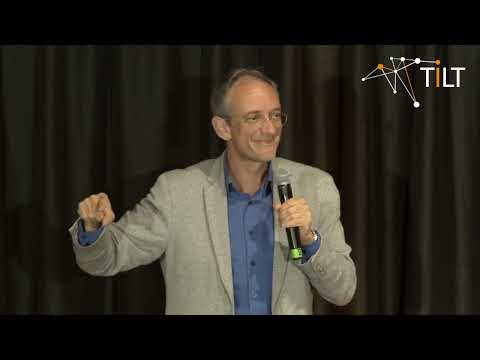
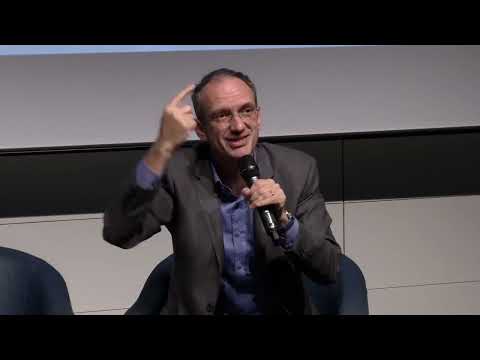
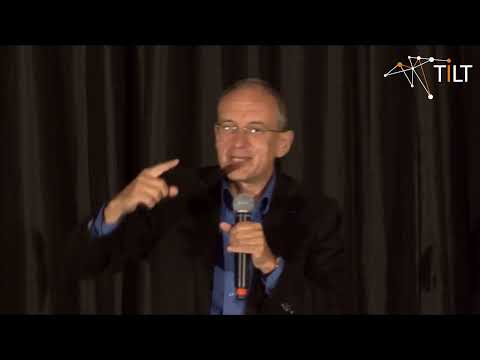
Frédéric Encel is a geopolitical expert, essayist, and international speaker, recognized for making contemporary power dynamics understandable through a clear and demanding pedagogy. A professor at PSB and a lecturer at Sciences Po Paris, trained by Yves Lacoste, he has established himself as a specialist in the Middle East, conflicts, borders, and representations, with a particular expertise on Jerusalem and the Israeli-Palestinian conflict. An awarded author and advisor to institutions and organizations, he helps decision-makers and the public anticipate crises and act with clarity in a complex world.

Frédéric Encel

Frédéric Encel is a geopolitical expert, essayist, and international speaker recognized for his ability to decipher with clarity the major upheavals of the contemporary world. He is a professor of international relations at PSB Paris School of Business and a lecturer at Sciences Po Paris, combining academic rigor with accessible pedagogy to aid the understanding of global power relations.

A graduate of Sciences Po Grenoble, he holds a doctorate in geopolitics from the University of Vincennes – Saint-Denis, qualified to supervise research. He was trained by Yves Lacoste at the French Institute of Geopolitics. His thesis, dedicated to Jerusalem, marks the starting point of an intellectual journey deeply rooted in the analysis of conflicts, territories, and representations.

A specialist in the Israeli-Palestinian conflict and more broadly in the Middle East, Frédéric Encel has worked for over twenty-five years on strategic issues, international relations, the defense of secularism, and gender equality. His perspective constantly intersects geography, history, strategy, and collective psychology. As a seminar director at the French Institute of Geopolitics and a speaker at the Institute of Higher National Defense Studies (IHEDN), he also advises public and private companies engaged internationally. He is a member of the jury for the Brienne Prize for Geopolitical Literature and regularly collaborates with the journals Hérodote and Politique Internationale.

Author of numerous reference works, including "Geopolitics of the Arab Spring" (Grand Prix from the Geographical Society 2015), "My Geopolitical Dictionary," and "The 100 Words of War," Frédéric Encel strives to make geopolitics intelligible without ever oversimplifying it. A charismatic speaker, demanding educator, and committed orator, he has given hundreds of lectures in France and abroad. His ambition is constant: to help decision-makers, organizations, and citizens anticipate crises, assess risks, and better understand the complexity of the world to act more effectively.

Contact with Us

Contacting us for more information or for requesting a speaker.

Understanding borders: the return of fronts and the rise of walls!

  • Borders have never been so visible… nor so complex. Neither totally natural nor purely artificial, they are transforming into major political, economic, and symbolic objects of the contemporary world.
  • Frédéric Encel shows how borders are today instrumentalized, renegotiated, and sometimes militarized to serve contradictory geopolitical interests. Walls, gray areas, maritime borders, cyber borders: territory is constantly being redefined.
  • He sheds light on the historical legacies that continue to weigh on their delineation, while analyzing their role in current migratory, commercial, or security crises.
  • This conference helps to understand that borders are much more than lines on a map: they reflect political passions, collective fears, and power rivalries.

Understanding the war: why, how, and tomorrow?

  • Why do we go to war? How did we practice it yesterday? What will tomorrow's conflicts look like? These are essential questions to which Frédéric Encel provides a rigorous and nuanced answer.
  • He shows that war is paradoxically less frequent and less deadly than other scourges, while remaining a structuring phenomenon of international relations.
  • Military strategies, technological innovations, doctrines, collective representations: war is analyzed from all its facets, without fascination or complacency.
  • Facing war, explains Frédéric Encel, is an indispensable condition for better promoting peace and preventing future conflicts.

The art of war and diplomacy by example

  • Through great strategists and battles in History, Frédéric Encel offers a captivating immersion into the art of strategy and decision-making.
  • How did Alexander the Great defeat Darius? Why did the English infantry crush the French cavalry during the Hundred Years' War? What stratagems upset the balance of empires?
  • Each example becomes a tool for understanding the universal springs of victory, failure, cunning, and anticipation.
  • This conference also reveals why the greatest military theorists, from Sun Tzu to Clausewitz, were fundamentally opposed to war itself.

Understand the geopolitics of Jerusalem!

  • Jerusalem is much more than a city: it is a global symbol, sanctified by more than two billion believers and contested by rival nations.
  • Frédéric Encel offers a rigorous geopolitical reading, intersecting Israeli territorial strategies, Palestinian diplomacy, and mystical representations.
  • He sheds light on the rational logics that lie behind the most exacerbated passions and places the actors within their historical and political dynamics.
  • An essential conference to grasp the extraordinary complexity of one of the most sensitive geopolitical hotspots on the planet.

Understanding geopolitics: going beyond preconceived notions!

  • Often perceived as an obscure discipline, geopolitics is nevertheless an essential tool for understanding the contemporary world.
  • Frédéric Encel clearly presents his key concepts: borders, sovereignty, power, representations, war, and peace.
  • He debunks about twenty widely held misconceptions about globalization, conflicts, the West, Islam, Europe, or the United States.
  • This lecture provides a solid framework for thinking about the world with rigor, nuance, and critical spirit.

A world less at war… but more fragile

Frédéric Encel shows that globally, high-intensity wars and mass killings have significantly declined since the 1990s, particularly due to dissuasion and negotiation. However, he warns about new vulnerabilities: American inconsistency under Trump, Russian strategic cynicism, Chinese influence offensives, and the absence of a Europe-power. Conclusion: In the face of fanaticism and power dynamics, peace holds if we remain credible, united, and firm, particularly by relying on secularism and the idea of nation.

The Middle East, between pragmatism, chaos, and strategic calculation

Frédéric Encel explains that the geopolitics of the Middle East eludes simplistic interpretations: States, and in particular Israel, prioritize predictability and pragmatism in the face of unstable or fragmented neighbors. He demonstrates how the weakening of Arab States, the rise of non-state actors, and internal rivalries (islamists, Shiites/Sunnis) are reshaping regional balances. Conclusion: in a chaotic environment, strategies of ceasefire, deterrence, and indirect alliances take precedence over ideologies, in the name of security and the balance of power.

The Arab world facing fractures: States, borders, and resentment

Frédéric Encel explains that the "Arab world" has never been a coherent geopolitical bloc: since the Arab Spring, we have mainly witnessed internal fragmentation (failed states, gray zones) and a changing nature of borders, increasingly tribal, clannish, or religious rather than national. He emphasizes that regional tensions are also exacerbated because the only effective great powers in the region (Iran, Turkey, Israel) are not Arab, fueling a culture of resentment and a conspiratorial imagination. Conclusion: despite the authoritarian and Islamist winter, he advocates for a long-term view—like in Europe after 1848—where these upheavals can, over time, reopen a trajectory of emancipation and reform.

Tel Aviv, the geopolitics of a showcase city

Frédéric Encel shows that Tel Aviv, the first Zionist city created in 1909, is a resolutely secular, European and pragmatic project, conceived in opposition to Jerusalem, a city of the sacred and the centuries. While it has lost its political and institutional centrality in favor of Jerusalem, Tel Aviv has become a diplomatic, cultural and technological showcase for Israel, embodying modernity, freedoms, and soft power on the international stage.