Skip to Content
 Philippe Cahen

“The future is not anticipated in past balances, but in the weak signals of the present!”

Philippe Cahen

Speaker · Prospectivist

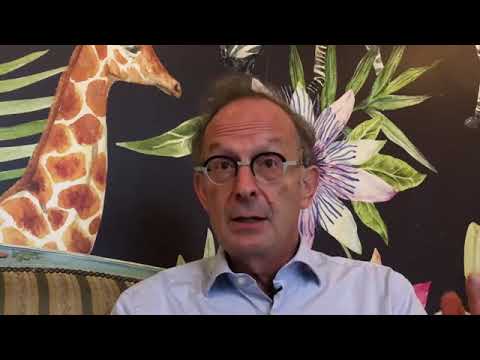
Philippe Cahen is a recognized futurist. Author of several reference works, he helps companies and institutions detect disruptions, build scenarios, and turn uncertainty into strategic advantage. His interventions, illustrated with concrete examples and full of humor, allow for a shift from a reactive stance to a true culture of anticipation and innovation.

Philippe Cahen

Philippe Cahen is a graduate in marketing with a long experience in design agencies, two disciplines that have shaped his unique way of thinking about the world from an early age. He began his career with large retail groups, where he confronted performance, consumption, and commercial strategy logics. This foundational experience revealed to him a lasting conviction: companies that only analyze the past are doomed to suffer the future. Very quickly, he became interested in emerging trends, weak signals, and deep transformations that silently and insidiously reshape societies long before they become visible in dashboards.

In 2003, driven by this intuition, he founded his own firm dedicated to anticipating societal and economic transformations. There he created "La Lettre des Signaux Faibles", a monthly newsletter that has become a reference followed by more than 8000 decision-makers from the economic, institutional, and academic worlds. His forward-looking approach is based on three complementary pillars: the detection of disruptive signals that are still invisible to traditional radars, the ability to "unlearn" dominant thought patterns to avoid the bias of the present and the conventional, and the development of multiple scenarios to help organizations prepare for various probable and even undesirable futures. This method, both rigorous and accessible, appeals to both innovative SMEs and large CAC 40 groups, who turn to him to challenge their certainties and strengthen their strategic resilience.

An active member of the French Institute of Design and for many years of the French Society of Foresight, Philippe Cahen regularly works with public and private organizations. Recognized for his ability to make foresight concrete and operational, he supports leaders and teams in understanding the major contemporary upheavals: demographic transitions, climate crises, technological acceleration, artificial intelligence, transformations of work, and new societal expectations. He is the author of eight reference works, including "Weak Signals. How to Use Them" (2010) (Economic Intelligence Prize), which helped disseminate his method, and "The Chaos of Foresight and How to Cope" (2023), where he provides insights for navigating an unpredictable world without renouncing action.

During his interventions, Philippe Cahen knows how to combine intellectual depth with pedagogical sense. On stage, he mixes anecdotes, case studies, and discreet humor to make foresight lively and useful. Far from abstract speeches, he invites his listeners to question their certainties, to observe the world differently, and to develop a more agile strategic posture.

Contact with Us

Contacting us for more information or for requesting a speaker.

Master weak signals to anticipate disruptions

  • The concept of weak signals is based on the observation of discrete or contradictory facts that, when accumulated, betray an upcoming change. Philippe Cahen shows how these indicators arise at the intersection of the economic, social, and environmental realms, and why their early detection provides a strategic advantage.
  • His method can be broken down into three phases: systematic collection (specialized press, fieldwork, networks), mental unlearning (unlearning certainties and sector biases), and dynamic scenarios (combining signals, inverses, and major trends).
  • Each step is illustrated by case studies from various sectors — distribution, mobility, health, technologies. Throughout the session, speaker Philippe Cahen explains how to transform corporate culture: establishing watch and awareness rituals, appointing 'scouts' responsible for identifying signals, and creating a foresight committee to arbitrate the scenarios. The aim is to shift from a reactive posture to active anticipation.
  • Finally, the conference concludes with the implementation of prospective performance indicators (KPI for monitoring, scenario adoption rates, return on investment for deployed innovations). These indicators allow for measuring not only the decisions made but also the organizational resilience in the face of turbulence.

Reinventing commerce through the circular economy!

  • Circular commerce is presented as a model break: moving from ownership to usage, from linear production to the circularity of flows. Philippe Cahen describes the regulatory evolution (anti-waste law, CO₂ penalties, European directives) and its concrete impacts on merchandising and supply chain managers.
  • He details three major families of circular mechanisms: reparability (warranty obligations, product modularity), reuse (second-hand purchases, exchange platforms) and recycling (deposit systems, local circuits). Each is illustrated by success stories from players like Vinted, Back Market, or logistics pooling initiatives in metropolitan areas.
  • One of the key challenges is the redefined customer relationship: moving from a one-time transaction to a continuous service relationship, with subscription, rental or on-demand "features". Philippe Cahen presents the necessary digital tools: enriched CRM, embedded IoT, blockchain traceability.

The future of work: humanization and automation!

  • This intervention starts with a mapping of the existing forces: the demographics of generations X, Y, Z, and Alpha, expectations regarding meaning, work-life balance, and flexibility. Philippe Cahen places these trends in the post-pandemic context, characterized by the explosion of remote work and the quest for organizational resilience.
  • He identifies the weak signals: micro-training in continuous flow, horizontal governance modes, salary indexing based on social impact, rural coworking. From there, he develops three contrasting scenarios:

Demography and the silver economy: between challenges and opportunities!

  • Philippe Cahen (member of the scientific council of Clariane, formerly Klorian) opens this theme with an overview of demographic changes: decline in Western Europe, explosion of longevity in Asia, climate migrations. He supports these trends with quantitative data and prospective maps to locate each region.
  • Weak signals are then presented: intergenerational modular habitats, robotic personal services, virtual socialization platforms, financial innovations to maintain the purchasing power of seniors. He shows how these signals translate into market niches.
  • Three scenarios serve as a red thread: "active retirement and co-living," "urban societies managed by the elderly," and "reverse intergenerational mix." Each scenario is scripted in terms of consumption, housing, health, and transport.
  • To conclude, he proposes a methodology for evaluating the social and economic impact of "silver" projects, with five key indicators: inclusion, autonomy, quality of life, financial viability, and territorial attractiveness.

Technological disruptions: AI, blockchain, and human-computer interfaces!

  • This conference starts with an overview of the "shadow" innovations: digital twins, "edge computing," post-quantum cryptography. Philippe Cahen explains why these technologies, still little known, have a considerable disruptive potential.
  • He then presents three prospective trajectories: algorithmic domination (governance by AI), techno-human symbiosis (brain-machine interfaces), and techno-resilience (retreat to low-tech). Each trajectory is illustrated by concrete weak signals, and then discusses its consequences for society and the company.
  • The session concludes with the presentation of a "responsible innovation pact" consisting of six commitments: technical transparency, informed consent from users, enhanced security, fairness in algorithms, traceability of decisions, and periodic review of models.

Weak signals: anticipating to act

Philippe Cahen explains how to detect and interpret weak signals that indicate disruptions. He illustrates his method with examples from the economy, technology, and society.

The chaos of forecasting: a guide

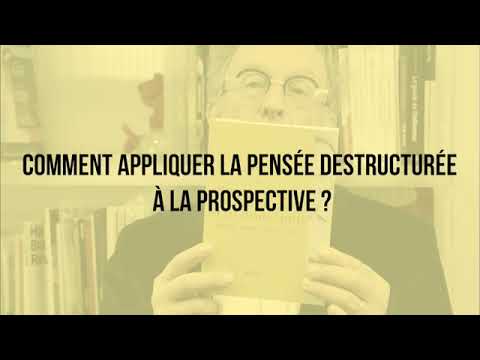
In this interview, Philippe Cahen reflects on his latest book and shares keys to navigate an uncertain world. He encourages to "unlearn" certainties to build dynamic and resilient scenarios.