“You don't leave a company, you leave a manager.”
Benjamin Chaminade
Australian-French entrepreneur and international speaker, Benjamin Chaminade is a reference in managerial innovation, organizational transformation, and the future of work. His atypical journey, between Europe and Australia, has led him to develop a profoundly pragmatic approach to management, based on experimentation, curiosity, and action. After starting his career at Disneyland Paris, where he discovered the challenges of intercultural management, he settled in Sydney and created several companies in human resources, including the first job site dedicated to customer relations. This entrepreneurial experience nurtures a vision of leadership focused on the real engagement of employees and operational efficiency.
Back in Europe, Benjamin Chaminade establishes himself as an expert in the changes in work. He was one of the first to introduce in France the concepts related to Generation Y, before broadening his scope of analysis to cultural transformations, new organizational models, and the impact of digital on management. His approach is based on a strong conviction: in a VUCA world—volatile, uncertain, complex, and ambiguous—companies can no longer afford to inspire, they must act. He thus develops hybrid formats (live diagnostic, workshops, prospective labs) that allow immediate transformation of reflection into decisions and concrete action plans.
Author of several books, including Manager in a Fragile World, he offers a clear-sighted reading of ongoing transformations and invites leaders to build more agile, resilient, and regenerative organizations. His work notably emphasizes the importance of curiosity, adaptability, and structuring thought in the face of uncertainty.
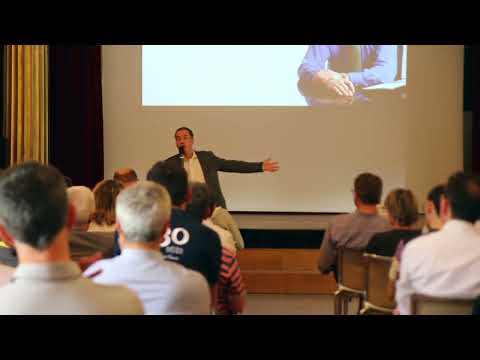
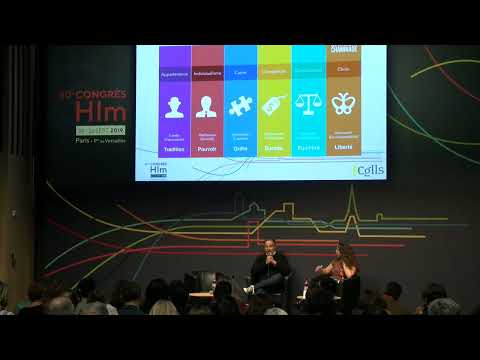
A recognized speaker, Benjamin Chaminade stands out with a direct, energetic style and no-nonsense approach. His interventions, always personalized, combine strategic analysis, field experience feedback, and immediately usable tools. He speaks in French and English to large groups, SMEs, and general management seeking sustainable transformation. Today, he accompanies organizations in a central challenge: moving from a reactionary culture to an anticipatory culture, making uncertainty a lever for innovation rather than a brake.
Facing managerial transformations: from confusion to clarity
- In an environment where everything is accelerating — technologies, expectations of employees, economic models — management is under pressure. Historical references are disappearing, decisions are becoming more complex, and managers often find themselves steering without a map. This gap between the speed of the world and the evolution of practices creates a vague sense of confusion, instability, and sometimes powerlessness.
- Benjamin Chaminade propose ici une lecture structurée de cette complexité à travers les grilles VUCA et BANI, non pas comme des concepts théoriques, mais comme des réalités opérationnelles vécues au quotidien. Il montre comment la volatilité, l'incertitude, la complexité et l'ambiguïté impactent concrètement la prise de décision, l'engagement des équipes et la capacité à agir.
- Au-delà du constat, cette intervention apporte des clés pour retrouver de la clarté : mieux définir les rôles, simplifier les processus, arbitrer dans l'incertitude et renforcer la cohérence managériale. Elle invite les participants à changer de posture : ne plus chercher à éliminer le flou, mais apprendre à naviguer dedans avec méthode.
- An essential conference for all organizations facing profound transformations and wishing to move from imposed management to chosen, lucid, and structuring management.
Remobilize your employees: move from fatigue to real engagement.
- In many organizations, fatigue is no longer occasional; it has become structural. The accumulation of transformations, loss of bearings, contradictory injunctions… employees are often present, but less engaged. Traditional motivation measures show their limits, as they address symptoms without tackling the causes.
- Benjamin Chaminade proposes to deeply revisit the concept of engagement. He demonstrates that it does not solely depend on working conditions or the tools provided but on the energy each person is willing to invest in their activity. This energy relies on a subtle balance between individual recognition, collective coherence, and organizational alignment.
- Through concrete examples and lived situations, he identifies the mechanisms that erode engagement and those that allow it to be durably restored. He invites managers to move away from top-down approaches and adopt a more empowering posture based on clarity, trust, and meaning.
- Participants leave with directly actionable levers to recreate team dynamics, re-ignite involvement, and transform engagement into a true performance driver.
Become a reference employer: from promise to reality!
- À l’heure où les talents choisissent autant les entreprises que l’inverse, la question de l’attractivité devient centrale. Pourtant, beaucoup d’organisations continuent à travailler leur marque employeur comme un exercice de communication, sans toujours interroger la réalité vécue en interne. Ce décalage entre promesse et expérience est aujourd’hui l’une des principales sources de désengagement.
- Dans cette conférence, Benjamin Chaminade propose de replacer la marque employeur là où elle prend réellement forme : dans le quotidien des collaborateurs. Il montre que l’attractivité ne se décrète pas, mais se construit dans la cohérence entre culture, management et expérience vécue.
- À travers une méthodologie claire, il aide les entreprises à identifier leurs points de friction, à comprendre les attentes réelles des collaborateurs et à aligner leur discours avec leurs pratiques. Il insiste sur l’importance de l’authenticité et de la transparence dans un contexte où l’information circule en permanence. Une intervention stratégique pour transformer la marque employeur en levier de fidélisation, d’engagement et de différenciation durable.
Humans facing digital transformation: reconciling technology and meaning!
- Digital transformation is becoming essential for all organizations, but its impact on individuals is often underestimated. Accelerated rhythms, information overload, loss of concentration… employees must continuously adapt to increasingly demanding environments.
- Benjamin Chaminade here proposes to place the human element at the heart of this transformation. He shows that performance does not rely solely on the adoption of tools, but on the ability of individuals to use them in a controlled and relevant manner.
- He explores the new fundamental needs of employees: regaining concentration time, giving meaning to action, enhancing their autonomy, and preserving their balance. He also warns of the risks of poorly accompanied digitalization: loss of engagement, cognitive fatigue, disconnection from reality.
- This conference offers concrete avenues to transform technology into a lever for emancipation, rather than an additional pressure factor.
The genome of innovation: creating the conditions for disruption!
- Innovation is often perceived as a matter of ideas. In reality, it is primarily a matter of systems. Why do some organizations innovate continuously while others stagnate despite their efforts?
- Benjamin Chaminade offers a nuanced reading of the mechanisms of innovation. He identifies the invisible elements that promote or hinder the emergence of ideas: culture, leadership, tolerance for error, and execution capacity.
- He shows that innovation relies on a balance between exploration and structuring. Too much freedom creates dispersion, while too much control stifles creativity. The challenge is to build a framework that allows both experimentation and the transformation of ideas into actions.
- Through concrete examples, he helps organizations identify their own "DNA of innovation" and activate the right levers to create sustainable value.
Intergenerational Management: Overcoming Stereotypes, Understanding Values
- Differences between generations are often addressed through the lens of stereotypes. However, these tensions are rooted less in age than in different value systems shaped by distinct economic, cultural, and technological contexts.
- Benjamin Chaminade offers a more nuanced and useful reading of these dynamics. He invites managers to move beyond simplistic oppositions to understand the deep expectations of each generation.
- He demonstrates how to adapt one's managerial posture to create connections, promote collaboration, and transform the diversity of profiles into collective wealth. He emphasizes the importance of listening, recognition, and clarity in building an inclusive management.
- A conference that allows transforming a often conflictual subject into a lever for cohesion and performance.
What work tomorrow? Reading the future already present
- The future of work is often approached as an abstract projection. However, the signals of change are already visible in current practices. It is necessary to know how to identify and interpret them.
- Benjamin Chaminade proposes a pragmatic approach: observing the present to understand the future. He analyzes the ongoing transformations — hybridization of work, evolution of skills, new expectations — to outline the contours of tomorrow's organizations.
- He invites participants to project themselves into a typical day of the future employee, in order to make these evolutions concrete and actionable.
- A conference that allows a shift from speculation to anticipation, and transforms uncertainties into strategic opportunities.
The future of management explained simply
Remote work: six levels of autonomy to master
Best practices for remote management
The future of work is not the same for everyone: trends, talents, and corporate culture
Generation Z: the real problem isn't them… it's our reading of the world of work
Compétences périssables, semi-durables, durables : ce qui fera encore votre valeur demain
VUCA : comment Amazon transforme l’incertitude en avantage stratégique
Lab prospectif : transformer les tendances en décisions
- Cet atelier combine une lecture des grandes tendances avec un travail collectif d’appropriation. Après une phase d’inspiration, les participants sont invités à projeter ces évolutions dans leur propre contexte.
- En sous-groupes, ils explorent les impacts potentiels, identifient les opportunités et construisent des scénarios. La restitution collective permet de croiser les regards et de faire émerger une vision partagée.
- Ce format crée un pont entre la réflexion stratégique et l’action. Il permet de dépasser le simple constat pour entrer dans une logique de décision.
- Les participants repartent avec des pistes concrètes, directement exploitables dans leur organisation.
Atelier VUCA : développer les réflexes face à l’incertitude
- · Dans cet atelier, les participants travaillent sur leurs propres situations de complexité, d’incertitude ou d’ambiguïté. L’objectif est de développer des réflexes communs pour mieux naviguer dans ces environnements instables.
- · À partir d’outils structurants, ils apprennent à clarifier les problèmes, à structurer leur pensée et à prendre des décisions malgré le manque d’information.
- · L’atelier met également l’accent sur la collaboration et l’intelligence collective, en montrant comment croiser les regards pour mieux appréhender la complexité.
- · Une expérience immersive qui permet de passer de la théorie à la pratique, et de renforcer immédiatement les capacités d’adaptation des équipes.