Skip to Content
 Élodie Gentina

“Decode Generation Z to turn challenges into opportunities.”

Élodie Gentina
Professor · Speaker · Expert
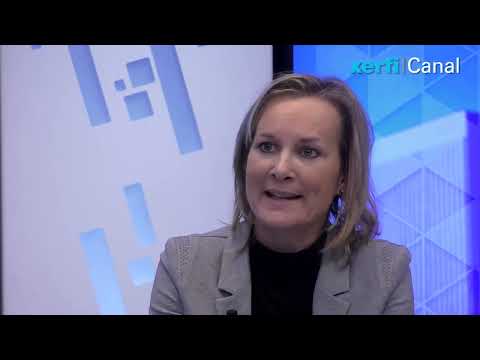
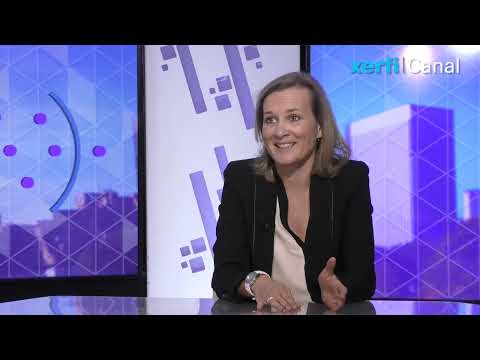
Élodie Gentina is a Doctor of Management Sciences and a researcher-professor at IESEG, a recognized specialist in Generation Z and its impacts on consumption, management, and innovation. She assists companies and institutions in better recruiting, retaining, and engaging young talents. Elodie Gentina is also an expert in intergenerational management. At a time when four generations coexist in society and in the workplace, she questions the importance of intergenerational relations: how to find one's place and thrive in a transforming work environment, regardless of age? How to deconstruct age-related stereotypes that weigh on both young people and seniors, generating misunderstandings and intergenerational tensions at work.

Élodie Gentina

Docteure en sciences de gestion (SKEMA Business School) et habilitée à diriger des recherches, Élodie Gentina a consacré sa thèse à décrypter les comportements de consommation de la Génération Z. Professeure-chercheure à l'IESEG School of Management à Lille, elle enseigne le marketing et l'innovation intergénérationnelle. En véritable ethnologue des « digital natives », elle a multiplié les terrains d'étude : plus de 50 interviews en face-à-face avec des 15-20 ans, des phases d'observation récurrentes et plus de 50 000 questionnaires administrés aux 15- 23 ans, en France et à l'étranger.

Today, she assists companies and institutions, from local SMEs to large groups, helping them to integrate and motivate young talents and work together across different generations. Her transdisciplinary diagnoses intersect sociology, psychology, and marketing. She is the author of five other works: 'The Challenge of Intergenerational Management. How to Transform Coexistence into a Virtuous Relationship' (2024, Dunod), 'Managing Generation Z in the Workplace' (2023, Dunod); 'Marketing and Generation Z. New Consumption Modes and Brand Strategies' (2016, Dunod Labelled FNEGE); 'Generation Z in the Workplace, from Z Consumers to Z Collaborators' (2019, Editions Dunod), and 'The New Generation in Asia, Dynamics, Differences and Digitalization' (2020, Emerald).

Ses travaux ont fait l'objet de conférences et de publications dans des revues académiques nationales et internationales (Social Sciences and Medicine, Jrnl of Business Ethics, Jrnl of Business Research, Jrnl of Retailing and Consumer Services, Décisions Marketing…). Elodie Gentina a également écrit de nombreux articles de presse sur la nouvelle génération et l'intergénérationnel, parus dans Management, Stratégie, Entreprise et Carrières, Challenges, le Nouvel Observateur, Le Parisien, Le Figaro, Les Echos, L'Express, Le Monde, The Conversation…. Intervenante régulière sur BFM Business, TF1, France 2… elle est consultée par les médias pour décrypter l'impact des jeunes générations sur le monde du travail et la société et comprendre le management intergénérationnel. En conférence, Élodie Gentina allie rigueur scientifique et anecdotes vives, pour offrir des clés de compréhension immédiatement actionnables. Son credo : dépasser les clichés, mettre en lumière les paradoxes et inspirer les dirigeants pour bâtir un management véritablement intergénérationnel.

Elle accompagne aujourd'hui de nombreuses entreprises et institutions, de la PME locale au grand groupe, pour les aider à intégrer et motiver les jeunes talents et à travailler ensemble, au travers des différentes générations. En particulier, elle mène de nombreuses conférences et interventions auprès d'entreprises de secteurs très variés — industrie, banque, assurance, retail, luxe, santé, tech ou encore services. Ses interventions s’adressent aussi bien aux dirigeants qu’aux managers, équipes RH ou collaborateurs.

Contact with Us

Contacting us for more information or for requesting a speaker.

The stakes of intergenerational management: From cohabitation to collaboration!

  • At a time when four generations coexist in society and in business, the issue of intergenerational relationships becomes central. How do we find our place and flourish in a rapidly changing work environment, regardless of age? How can we deconstruct age-related stereotypes that affect both young and senior individuals, contributing to misunderstandings and tensions at work? Ageism is currently the leading form of professional discrimination in France. One in two seniors has experienced devaluing work relationships in the past five years, and 75% of HR professionals admit to favoring younger profiles. On the other hand, young people are not spared either: 16% of those under 24 are unemployed.
  • The first part of the conference offers a portrait of the different generations – beta, Z, Y, X, baby boomers – showing the tendency to pigeonhole individuals into generational categories. This raises questions about the very relevance of the concept of generation: is it truly a generational factor or more of a question of the times? It becomes essential to demystify these categories, move beyond clichés, and better understand the behavioral specifics of each group. The second part focuses on common expectations between generations to assess the importance of intergenerational management.
  • Managers are encouraged to move beyond a segmented HR approach to adopt an inclusive policy that fosters cohesion between ages. This involves rethinking recruitment practices, the approach to engagement, authority, training, and communication, in order to create lasting bridges between generations. Encouraging intergenerational collaboration is not just an HR challenge, but is truly a strategic lever. Diverse age teams are more effective, as they combine experience with a fresh perspective. The intersection of viewpoints stimulates innovation, while the recognition of all generations enhances engagement and retention of talent.
  • Lastly, the attention given to intergenerational links responds to a broader crisis of social connection, marked by a loss of landmarks and individualism exacerbated by the digital divide. Intergenerational interaction is not a mere tool but a culture built on humanistic and postmodern values — such as interconnection, inventiveness, ethics, and hedonism — shared by both young and senior individuals.
  • Cette conférence donne aux managers et dirigeants des clés concrètes pour mieux comprendre les attentes des différentes générations et adapter leurs pratiques managériales. Les participants repartent avec des outils et leviers immédiatement applicables pour renforcer l’engagement, fluidifier les relations intergénérationnelles et améliorer durablement la performance collective.

Societal and managerial issues of Generation Z: The future challenges of Generation Z in business!

  • The new generation, often referred to as Generation Z, Alpha, Emos, or "C" for connected, occupies an increasing place in the media and public debates. It is frequently described through clichés and stereotypes, sometimes giving the impression of a fashion phenomenon or an epiphenomenon. Young people are thus labeled as consumerist, narcissistic, rebellious, channel-zappers or defying authority. However, it is essential to move beyond these simplistic labels in order to better understand this generation's cultural evolution and the specificities of its behaviors.
  • This intervention revolves around three primary objectives. First, it aims to clarify the persistent confusions between generations Y and Z. While the boundary between these two generations may seem blurry, especially since some Z behaviors prolong or amplify those of Y, there are real differences. These gaps can be explained by distinct societal contexts, which need to be contextualized to better understand what has shaped each of these generations. Secondly, Elodie Gentina adopts a societal and psychosocial approach to decipher the deep characteristics of Generation Z. Far from being uniform, this generation proves to be more complex than it appears.
  • It stands out as a "generation of firsts": the first generation to be entirely digital natives, omniscient in their relationship to knowledge, hyper-modern in the face of authority, post-material in their relationship to ownership, and marked by the health crisis of Covid-19, which has reinforced forms of engagement and activism. Finally, this conference questions the relationship to work and to the company through the generational prism. Creating a societal portrait of Generation Z allows us to anticipate upcoming managerial challenges and make change more effective and constructive.
  • After the upheavals introduced by Generation Y, Generation Z in turn interrogates management practices, motivation levers, the relationship to hierarchy, intrapreneurship, training, learning, and permanent contracts. This analysis relies on in-depth knowledge of generations Y and Z, based on research conducted from over a hundred individual interviews, numerous focus groups, field observations, and more than 60,000 questionnaires administered in France and internationally. The results of this work shed light on the managerial issues related to the new generation.
  • Cette intervention aide les entreprises à mieux comprendre les attentes de la génération Z et les transformations qu’elle impulse dans le monde du travail. Elle apporte des pistes concrètes pour attirer, engager et fidéliser les jeunes talents, tout en favorisant une meilleure coopération entre les génération

Conference (September 2025). Human Days Lille. Intergenerational management: a challenge, a richness Description

In a context where four generations coexist in the workplace (baby boomers, X, Y, and Z), benchmarks, expectations, and aspirations differ profoundly depending on the generational prism. This conference aims to explore the challenges of intergenerational management: how to understand and value the specificities of each generation? How to overcome age-related prejudices and stereotypes? And if generational diversity became the engine of a more efficient, more creative, and more united enterprise?

Elodie Gentina – Stonewegtv (February 2024). New report on Generation Z's work relationship. Description

How to attract and retain young talent in a scarcity context? Élodie Gentina presents the "Z paradox"
and shares concrete levers to reinvent the employee experience.

Conference (October 2024). Human Days Lille. Is the new generation revolutionizing the world of work?

There is a significant mismatch between what companies offer to employees and what they expect today from their employer. Indeed, the younger generation has initiated a profound questioning of their relationship with the world of work, a true paradigm shift. What are the expectations of young people in the workforce? In a rapidly changing professional environment, how can they be attracted to companies? In the face of increasingly mobile young people, eager for new experiences and unafraid to resign, what are the retention levers available to companies? How to manage these individuals, who challenge the authority of elders and institutions?

Le théâtre des générations au travail!

  • Élodie propose un atelier immersif et participatif inspiré des codes du théâtre afin d’aider les managers à mieux appréhender les dynamiques intergénérationnelles au sein de leurs équipes. À travers des mises en situation tirées du quotidien professionnel, les participants explorent les incompréhensions, tensions et décalages pouvant émerger entre les générations, puis expérimentent collectivement des pistes de résolution en jouant des scénettes.
  • Répartis en sous-groupes mêlant différentes générations, les participants imaginent ensemble des solutions concrètes adaptées aux situations présentées. Ils rejouent ensuite les scènes en mobilisant les outils et méthodes abordés lors de la conférence, afin de tester de nouvelles postures et modes de communication.
  • Cet atelier favorise la prise de recul, l’intelligence collective et l’expérimentation concrète. Chaque participant repart avec des leviers directement applicables dans son quotidien managérial pour renforcer la coopération, fluidifier les échanges et améliorer durablement le fonctionnement des équipes.

Générations en débat : paroles croisées sur le travail de demain!

  • À la suite de la conférence, Élodie propose d'animer un workshop interactif sous forme de table ronde afin de prolonger les échanges et de transformer les réflexions en actions concrètes. Véritable espace de dialogue, cet atelier permet de faire émerger les réalités vécues au sein de l’entreprise en donnant directement la parole aux participants : collaborateurs de la Gen Z, managers, dirigeants ou équipes RH.
  • À partir de thématiques concrètes telles que le recrutement, l’engagement, la fidélisation, le sens au travail, la communication ou encore les nouvelles attentes professionnelles, les participants confrontent leurs points de vue, partagent leurs expériences, leurs réussites comme leurs difficultés, et identifient ensemble les incompréhensions ou freins qui peuvent exister entre les générations.
  • Cette approche collaborative permet d’entrer au cœur des enjeux propres à l’entreprise et de faire émerger des solutions adaptées à sa culture et à ses équipes. En tant qu’experte, Élodie structure les échanges, apporte des clés de lecture, prend de la hauteur sur les débats et synthétise les enseignements majeurs afin de faire émerger des pistes d’action concrètes et immédiatement mobilisables.
  • Les participants repartent avec une vision plus claire des attentes générationnelles, des idées applicables sur le terrain et une dynamique collective renforcée autour des enjeux du travail d’aujourd’hui et de demain.