“What if chaos wasn't the problem… but your greatest lever of action?”
Bruno Marion
Bruno Marion
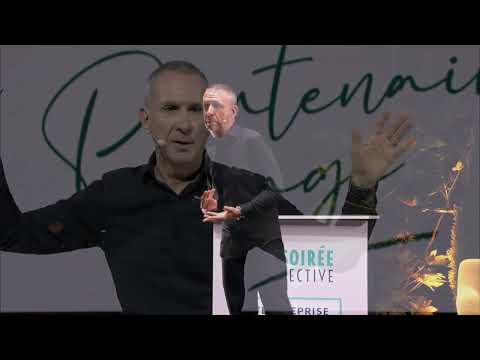
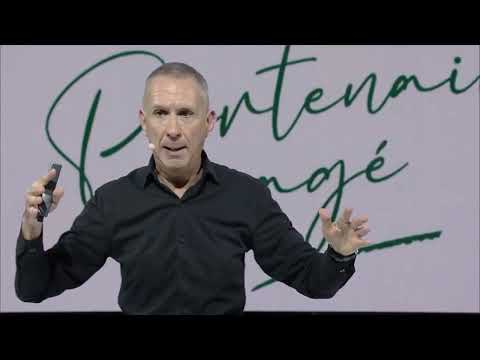
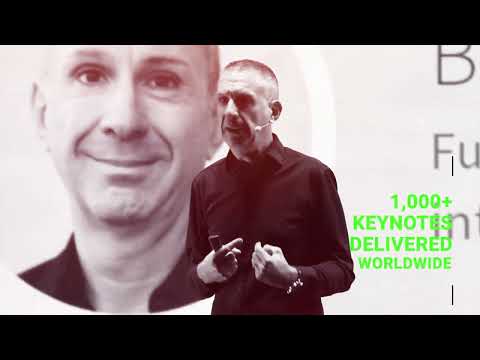
Bruno Marion is an international speaker, futurist, and a recognized expert in the theories of chaos applied to leadership, management, and decision-making. An engineer by training and holding an MBA from EM Lyon, he began his career in industry, notably at Mersen and then at Alsthom, where he held positions in commercial management and international development.
During this first part of his career, he faced complex and unstable environments, particularly through his numerous international experiences, especially in Asia. He observed organizations in difficulty, sometimes on the brink of collapse, and wondered what allows some to rebound while others disappear.
This quest led him to explore in depth the mechanisms of transformation, resilience, and adaptation. He gradually developed a unique approach, inspired by chaos theories, which allows him to propose a new reading of the world: a world not disordered but structured by invisible dynamics and emergence logics.
Today, Bruno Marion supports leaders and organizations to help them navigate uncertainty, to better understand the ongoing changes, and to transform crises into opportunities. His interventions provide a clear, accessible, and immediately applicable framework for acting in an environment that has become more complex, faster, and more interconnected.
Author of works including Chaos, User's manual and books on intercultural relations in Asia, he establishes himself as a reference on issues of transformation and resilience. Inspiring, energetic, and educational, he invites everyone to change their perspective to better understand the world... and above all to learn to act.
Thrive in a chaotic world!
- We are living in a time of profound transformation, marked by uncertainty, complexity, and rapid changes. Where traditional models struggle to provide answers, Bruno Marion offers a new perspective: chaos is not disorder, but a structured state that can be understood and utilized.
- During this conference, he deciphers the reasons why our world has become more unstable: the explosion of the number of actors, hyper-connectivity, and the acceleration of phenomena. He shows how these dynamics create amplification effects that disrupt the rules of the game.
- But above all, he provides concrete keys to take action. Through concepts derived from chaos theories, he allows for better decision-making, clarity, and the construction of strategies suited to unpredictable environments.
- Participants leave with a strong conviction: uncertainty is no longer an obstacle, but a lever. An opportunity to regain power and transform crises into engines of growth and innovation.
Decision making in uncertain environments!
- In a world where landmarks are constantly changing, making decisions becomes a major challenge for leaders and teams. Traditional models based on forecasting and control are now showing their limits.
- Bruno Marion proposes a different approach, rooted in chaos theory. He explains why, in certain contexts, trying to control can exacerbate situations, and how to adopt a more suitable stance in the face of uncertainty.
- Through concrete examples and operational tools, he shows how to make effective decisions even in the absence of complete information. He particularly introduces the notions of the butterfly effect and self-amplifying dynamics.
- This conference allows for a profound shift in posture: moving from a control logic to an influence logic, and regaining confidence in one's ability to act, even when everything seems uncertain.
Resilience and transformation: leveraging crises
- Crises are now an integral part of our environment. Whether they are economic, health-related, or organizational, they challenge established balances and force us to reinvent ourselves.
- Bruno Marion shows that these moments of rupture are not just threats, but also opportunities for emergence. He explains how some organizations manage to transform deeply while others collapse.
- By relying on chaos theories, he sheds light on the mechanisms that allow for the development of resilience, both at the individual and collective levels. He shares simple tools to strengthen teams' adaptability.
- The intervention allows for a change in perspective on crises: they become turning points, key moments where the most significant and sustainable transformations take place.