“Keep a hand on the machine, to decide better and cooperate better.”
André Angotti
Business and local authority consultant, André Angotti is a speaker specializing in artificial intelligence (expert systems) and organizational performance. Born on January 21, 1952, in Kef (Tunisia), he holds a DEA in Management Sciences (Université Paris-1 Panthéon-Sorbonne). After an initial part of his career in IT — management followed by development — he has been supporting leaders and their teams for over thirty years in technological choices, process transformation, and decision-making tools. His hallmark: linking human discernment and expert systems so that human intelligence remains in control of the machine.
All of his conferences start or integrate a philosophical approach. For him, it would be dangerous to leave philosophers with a monopoly on thought — a very real drift today. Understanding AI also means understanding the great intellectual oppositions that have shaped our way of reasoning: Plato vs Aristotle, St. Augustine vs Descartes, Pascal vs Zadeh, Freud vs Jung, Bergson vs Einstein… A wealth of fruitful tensions that he mobilizes to shed light on contemporary uses of AI and their impact on our organizations.
As an experienced trainer, André Angotti has taught at Centrale Paris / CentraleSupélec, Sciences Po, the Sorbonne, the Faculty of Pharmacy Paris-Sud, the IAE, ESP Paris, and at Laval University (Quebec). He is also the designer of models that have become signatures in professional circles: the ANGOTTI Wheel® (well-being and hidden costs), the Motivation Agreement® (commitment framework), and OMIA®, a method dedicated to explainable, controlled, and field-compatible AI uses.
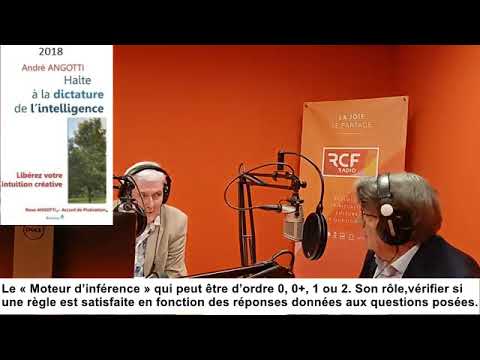
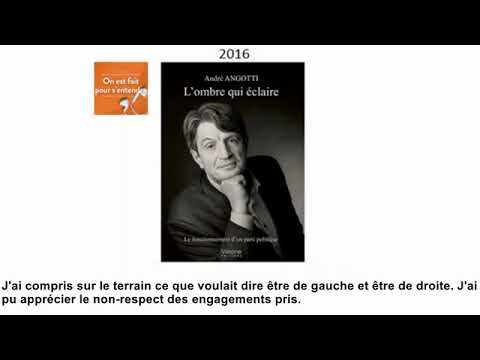
A prolific author, he writes several essays that extend his reflections on complexity, decision-making, and organizational management: Approaching Complexity Easily (Eyrolles, 2004), Political Janus (2016), The Shadow That Illuminates (2016), Stop the Dictatorship of Intelligence! (2018), and Economics and Economists – The Divorce (2020). On stage, André Angotti combines operational pedagogy, decision matrices, and feedback: how to select AI use cases, make teams not only effective but efficient, or manage a municipality in the digital age. He is regularly found at regional conferences, particularly in Occitanie (Gers, Rotary Lectoure-Fleurance), where his ability to connect philosophy, method, and pragmatism consistently engages the audience.
Useful and mastered AI: keep control over the machine
- Artificial intelligence is only valuable when it enlightens human decisions without replacing them. This conference clarifies what can be expected from an "explainable" and " controllable" AI, and what should continue to be trusted to the judgment of the teams. The aim is to demystify technology to put it back in its rightful place: a lever in service of professions, users, and territories.
- André Angotti precisely distinguishes between tasks involving clear rules — the natural domain of expert systems — and those requiring informed human judgment. He shows how to leverage on-the-ground knowledge, outline reasoning, and document decisions to ensure accountability and compliance. The approach is concrete and pragmatic, supported by examples from public and private organizations.
- Participants leave with a simple framework to select their use cases, assess the value/risk ratio, and frame operational ethics (bias, sovereignty, data). This method avoids fads and secures the industrialization of initial projects.
- It also facilitates ownership by teams, a condition for sustainable transformation. The session is aimed at general management, IT directors, business leaders, and elected officials. It alternates between inputs, feedback, and short framing exercises tailored to the organizational context. At the end, everyone has a shared language and a realistic action plan to "keep control" over the machine.
Deciding in a complex context: going beyond the 'Cartesian all'
- When the variables multiply and the information remains incomplete, linear logic reaches its limits. This conference proposes another way to frame problems and make decisions despite uncertainty. The goal is to learn to cope with complexity rather than suffer from it.
- André Angotti introduces concrete thinking tools: mapping what we know and what we don't know, formulating testable hypotheses, defining decision thresholds, and establishing learning loops. These guidelines transform the anxiety of "vagueness" into structured and shareable processes. They allow for aligning strategy and execution without slowing down action.
- Teams discover how to accelerate decision-making while increasing its robustness. They learn to arbitrate with explicit criteria, document choices, and reduce the amount of implicit interpretations that fuel conflicts. This change in posture improves the quality of projects and reduces organizational wear and tear.
- The conference is aimed at executive committees (CODIR), project managers, PMOs, and transformation managers. It alternates real cases and brief situational exercises so that each participant leaves with reusable templates for the next day. The expected benefit is twofold: clearer decisions and smoother cooperation.
From effective collective to efficient collective
- Producing much is no longer enough; we must produce just enough, at the right human and operational cost. This conference shows how to move from simply effective teams to truly efficient teams. It emphasizes the quality of the flow, clarity of roles, and reduction of frictions.
- Starting from the ANGOTTI® Wheel and the Motivation Agreement®, André Angotti offers simple rituals to synchronize activities and secure transmissions. He explains how to make visible the hidden costs — rework, silos, micro-conflicts, waiting — that undermine performance. The approach values tacit knowledge and strengthens autonomy.
- Teams learn to establish minimalist metrics, readable by everyone, and to manage improvements in short cycles. This dynamic avoids over-procedure and gives meaning to daily adjustments. It creates the conditions for long-term commitment, without dependence on occasional "whips" for motivation.
- The intervention targets frontline managers, unit directors, and project team leaders. It provides a 90-day action framework to initiate changes without disrupting the existing structure. The result is more stable, serene, and easily transmissible performance.
Motivation & QVT : (re)give the desire to act
- Motivation does not come by decree; it is built over time. This conference connects meaning, recognition, autonomy, and organizational justice to create lasting commitment. It places quality of life at work at the heart of performance, far from empty promises.
- André Angotti offers a quick diagnosis of the social climate to prioritize irritants, followed by a shared commitment framework with the Motivation Agreement®. Recognition rituals are made concrete, measurable, and credible. The goal is to achieve visible progress without adding unnecessary complexity.
- The expected results are tangible: reduced tensions, retention of talent, decreased absenteeism, and improved cooperation. Teams regain their energy because they perceive the usefulness of their efforts and the coherence of decisions. This coherence nurtures trust, the foundation of sustainable performance.
- The conference is aimed at HR directors, employee representatives, and management. It provides ready-to-use tools — QVT barometer, short/mid-term action plan — and a method to track the impact without burdening the processes. Everyone leaves with simple and credible first steps.
Better manage a municipality in the digital age
- Citizens' expectations are rising while resources remain constrained. This conference helps communities deliver a clear and fast public service without an organizational "big-bang". It shows how to prioritize actions that truly enhance user experience.
- André Angotti proposes to simplify pathways, design understandable dashboards, and introduce AI where it is useful and explainable. Compliance issues — data protection, traceability, processing register — are integrated from the design phase to avoid setbacks. The goal is a visible and assumed continuous improvement.
- Concrete cases illustrate the potential gains in HR services, reception, urban planning, or civil security. Teams learn to map their processes, prioritize by value and risk, and then measure the results obtained. This example-based pedagogy establishes a shared culture of progress.
- The intervention is aimed at elected officials, DGS/SG, and department heads. It provides a common framework that facilitates dialogue between politics and operations. At the end, the community has a realistic roadmap to enhance skills and strengthen citizens' trust.
Artificial Intelligence mastered by Human Intelligence: dream or reality?
- The conference opens with an exploration of the different forms of intelligence, both human and artificial, reminding us that each individual possesses their own contextualized form of intelligence. It traces the major historical milestones of AI, questions the reliability of information, and examines our relationship with the Cartesian paradigm in the face of systems capable of automating thought.
- André Angotti then addresses the notion of time, informed by Bergson's philosophy, to show how AI alters our relationship with duration. While it promises to 'save us time', it can also lead to a loss of bearings, autonomy, and trust, creating a cognitive dependency that undermines personal reflection.
- The conference explores modes of reasoning — procedural and declarative — and how they coexist with expert systems. It discusses human limitations in rule construction, frequent errors, and the crucial question of technological singularity: that moment when humans can no longer control the algorithm.
- A significant portion is devoted to human resources and recruitment: jobs related to AI, the potential improvement of working conditions, and behavioral analysis tools. However, the speaker emphasizes the limitations of AI, which is unable to anticipate certain human dynamics like the 'Tyrant', the 'Good Student', or the elimination of the best element by a group.
- Finally, the conference opens up societal issues: the influence of AI on democracy, manipulation of information, rise of extremes, and transformation of republican values. Angotti examines the cultural contrasts between France and Germany and warns of the risk of a shift towards a co-management of Big States and Big Tech, in a context where abstention gives disproportionate power to minorities.
The Motivation Agreement: how to reconcile performance and well-being at work?
- Workplace malaise is no longer a secondary issue: it directly impacts the performance of organizations. Burnout, disengagement, and loss of meaning reveal a deep gap between employees' expectations and companies' operational modes. Traditional responses, often focused on management or financial incentives, struggle to address the real causes of these tensions.
- This conference offers a new perspective on workplace behaviors, informed by neuroscience and the work of Henri Laborit and André Angotti. It highlights different behavioral mechanisms, including a fifth one – that of terror – which strongly influences human reactions in professional contexts. Understanding these levers allows us to move beyond a simplistic view of management to adopt a more insightful and effective approach.
- At the heart of the intervention, the Accord de Motivation® and the Roue Angotti® provide a concrete method for action. This approach relies on co-construction with teams, articulating two key dimensions: satisfaction related to working conditions and motivation related to meaning, recognition, and human relationships. It restores a central role to managers in facilitating collective dynamics.
- Beyond the tools, this approach invites a profound transformation of the business model. It encourages a shift from a logic of control to a logic of trust, and from resource management to talent appreciation. By better aligning organization, behaviors, and purposes, it strengthens both well-being, cooperation, and sustainable performance.