“"Ecology is not just another topic: it is the very condition of our collective future."”
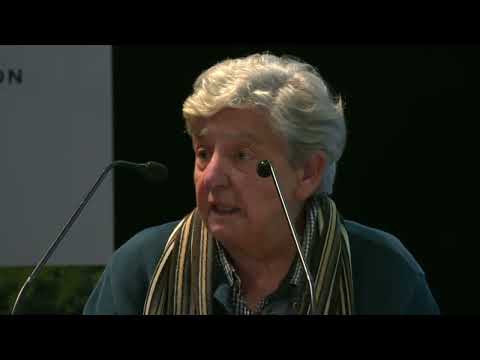
Dominique Bourg
Dominique Bourg
Dominique Bourg is one of the major thinkers of contemporary ecology, at the crossroads of philosophy, science, and politics. Honorary professor at the University of Lausanne, he has dedicated over thirty years to environmental issues, sustainability, and the profound transformations of our societies. His thought, rigorous and engaged, sheds light on the ongoing changes with rare depth. He has established himself today as an essential voice for understanding the challenges of our time.
A recognized specialist in political ecology, he has contributed to structuring the public debate on key concepts such as the precautionary principle, planetary boundaries, and ecological democracy. His institutional background is remarkable: a member of the Coppens Commission, a participant in the Grenelle of the Environment, a scientific advisor to major institutions and foundations, he has directly participated in the construction of contemporary environmental policies.
Author of a rich and influential body of work, Dominique Bourg has published about twenty reference works, translated and discussed in the academic and political world. His books question the foundations of our relationship to progress, nature, and technology, while proposing paths to refound our economic and democratic models. His thought largely transcends the scientific framework to touch on the cultural, ethical, and spiritual dimensions of ecology.
A sought-after speaker, he lectures in France, Switzerland, and throughout the Francophonie before institutions, businesses, and international organizations. His demanding and structured speeches invite a genuine change of perspective on the contemporary world. He does not merely explain ecological transition: he reveals its deep conditions, limits, and civilizational stakes.
Ecological transition: towards a change of civilization!
- The ecological transition is not merely a technological evolution or a marginal adaptation of our economic models. It represents a profound transformation of the ways we produce, consume, and think about our place in the world. Dominique Bourg invites us to move beyond the illusions of green growth that would reconcile infinite development and finite resources.
- Through a rigorous analysis of environmental dynamics, he sheds light on the structural limits of our current model. The ecological crisis is not only environmental: it is also political, social, and cultural. It questions the very foundations of our civilization and calls for a global redesign of our systems.
- His conferences help to understand why current responses remain insufficient in the face of the magnitude of the challenges. He demonstrates that the necessary transformations involve deep changes in our ways of life, our institutions, and our collective imaginaries.
- Each intervention thus becomes a moment of reflection and clarity, allowing decision-makers to better apprehend the ongoing changes and anticipate possible trajectories.
Ecological democracy: rethinking our institutions
- In the face of the ecological emergency, contemporary democracies often appear helpless. Structured around the short term, they struggle to integrate long-term issues, the interests of future generations, and the preservation of living beings. Dominique Bourg proposes an ambitious reflection on the limits of our political systems.
- He analyzes the reasons why current institutions fail to respond effectively to environmental challenges. Between political inertia, economic pressure, and fragmentation of responsibilities, decision-making mechanisms show their limits.
- From these observations, he explores the contours of an ecological democracy capable of integrating the long term and redefining the common good. This approach opens up new perspectives for rethinking the governance of organizations and territories.
- His conferences thus offer valuable keys to understanding for public and private decision-makers faced with complex strategic choices in a context of increasing uncertainty.
Planetary boundaries and habitability of Earth
- Scientific works on planetary boundaries have profoundly transformed our understanding of the world. They show that human activity has already crossed several critical thresholds, threatening the balance of ecosystems and the stability of our societies.
- Dominique Bourg deciphers these mechanisms with great clarity, highlighting the systemic interactions between climate, biodiversity, resources, and human activities. He emphasizes that these limits are non-negotiable and impose a strict framework on our economic and political choices.
- He invites us to rethink our relationship to growth and prosperity in light of these physical constraints. This approach allows us to move beyond abstract speeches to enter into a concrete understanding of the stakes involved.
- Each intervention illuminates the conditions for a habitable planet and the levers of action that allow us to anticipate the necessary transformations.
Precautionary principle and risk management!
- In a world marked by uncertainty and complexity, the notion of risk is evolving profoundly. Dominique Bourg shows that we have moved from a universe of manageable risks to a world of systemic, global, and potentially irreversible threats.
- He revisits the precautionary principle, often misunderstood, by showing that it is not a hindrance to innovation but a framework for action in uncertainty. He proposes a renewed reading of decision-making in contexts where the consequences can be major.
- His analyses help to better understand the stakes related to emerging technologies, to environmental crises, and to economic transformations. They offer conceptual tools for navigating unstable environments.
- This conference is particularly aimed at leaders faced with complex decisions, where risk management becomes a central strategic issue.
Sobriety and new ways of life!
- The ecological transition involves a profound transformation of our ways of life. Dominique Bourg offers a reflection on sobriety, not as a constraint, but as an opportunity to redefine our collective priorities.
- He questions the cultural foundations of consumerism and sheds light on the mechanisms that sustain our dependence on material growth. This analysis paves the way for new forms of prosperity.
- He shows that sobriety can be synonymous with quality of life, social cohesion, and meaning. It then becomes a lever for cultural transformation as much as economic.
- His conferences invite us to rethink organizational and individual models, fully integrating ecological issues into long-term strategies.