Skip to Content
 Gunter Pauli

“La nature travaille avec ce qui est disponible localement.”

Gunter Pauli

Speaker · Entrepreneur · Environmentalist
Gunter Pauli est un entrepreneur et économiste belge, créateur du concept d'Économie Bleue, qui propose de transformer nos modèles de production en s'inspirant des écosystèmes. Auteur de plus de 25 ouvrages traduits dans 40 langues, il est aussi à l'origine des Fables de Gunter, un programme éducatif mondial pour sensibiliser la jeunesse aux enjeux de durabilité. Conférencier international, il illustre par des projets concrets comment conjuguer innovation, prospérité et régénération écologique.

Gunter Pauli

Gunter Pauli is a Belgian economist, entrepreneur, and visionary dubbed by the international press as the "Steve Jobs of sustainable development" or the "Che Guevara of sustainability." A graduate in economics from Loyola University in Antwerp and holding an MBA from INSEAD, he made the choice early on to use his skills for the ecological transformation of our societies. After leading Ecover, a pioneer in ecological detergents, he decided to devote his career to researching and deploying zero-pollution solutions. In 1994, he founded the ZERI (Zero Emissions Research & Initiatives) network under the auspices of the United Nations University in Tokyo. This initiative marked the starting point of the Blue Economy, a concept that proposes to draw inspiration from natural ecosystems to create value without producing waste. His credo: "In nature, there is no waste; everything becomes a resource." This systemic approach quickly attracted businesses, governments, and international institutions.

A prolific author, Gunter Pauli has published over 25 works translated into more than 40 languages, including The Blue Economy: 100 Innovations, 100 Million Jobs, The Blue Economy 3.0, and Let's Be as Smart as Nature!. He is also the creator of The Gunter Fables, a pedagogical collection of 365 stories for children to develop their scientific curiosity, creativity, and entrepreneurial spirit. A sought-after speaker worldwide, he has shared his vision at major international events: World Economic Forum in Davos, UN conferences, Zermatt Summit, IRIS, APM, ESCP Business School, and many TEDx events (Tokyo, Flanders, Taipei). His talks are marked by concrete examples of regenerative innovations in energy, food, water, materials, and health.

An indefatigable innovator, he is also behind PORRIMA, a laboratory ship powered by solar energy, marine hydrogen, and kites, demonstrating breakthrough technologies. This emblematic project illustrates his conviction: it is not enough to theorize; we must prove that radical solutions are possible on a large scale. Married and a father of six children, multilingual (speaking seven languages), Gunter Pauli also dedicates a significant part of his energy to the education and inspiration of young generations. His ambition has remained the same for over thirty years: to prove that it is possible to reconcile economic prosperity, ecological regeneration, and social inclusion by transforming our models of production and consumption.

Contact with Us

Contacting us for more information or for requesting a speaker.

The Blue Economy: innovate like nature

  • • The blue economy proposes to transform our perspective on production and consumption by being inspired by nature. Whereas the green economy often limits itself to "reducing" or "compensating," the blue economy regenerates and creates additional value. It is based on a simple idea: to use what is locally available to generate multiple value chains, without waste or pollution.
  • • In this conference, Gunter Pauli illustrates with concrete examples how a simple coffee ground can become the starting point of an entrepreneurial ecosystem: mushroom production, animal feed, soil fertilization. Each flow becomes an economic and social opportunity.
  • • He also explains how this model enables the creation of jobs on a large scale. His famous bet "100 innovations, 100 million jobs" has inspired many governments and regions. Far from being a utopia, the blue economy relies on pilot projects that are already operational in agriculture, energy, water, or materials. 
  • • Participants will leave with a clear understanding of an alternative, competitive, and regenerative model that meets the fundamental needs of all while strengthening local resilience.

Let's be as smart as nature

  • • Our societies face unprecedented challenges: dwindling resources, climate crises, and growing inequalities. For Gunter Pauli, the key is not more technology but better observation of the laws of nature. It teaches us abundance, cooperation, and infinite creativity.
  • • Through twelve major trends he has identified, Gunter Pauli shows how bio-inspired solutions can transform agriculture, energy, water, and industry. From three-dimensional agriculture to bioplastics made from invasive plants, the examples demonstrate the power of ecosystems as models of resilience.
  • • This conference proposes a new way of thinking about prosperity: not by exploiting more, but by mimicking the evolutionary mechanisms that have allowed life to thrive for millions of years. The intelligence of nature becomes our greatest laboratory for innovation.
  • • Leaders and teams thus discover how simple, local, and accessible solutions can reinvent their production models, reduce their dependence on scarce resources, and create a positive impact on society.

Innovation for the benefit of territories: creating regenerative jobs

  • • Unlike globalized models that concentrate wealth and jobs, the blue economy focuses on local territories. Each resource, every flow, and every local know-how can become the engine of inclusive development.
  • • In this presentation, Gunter Pauli explains how entire regions, from Colombia to El Hierro in the Canary Islands, have managed to transform their economy by relying on regenerative innovation. The objective is clear: to create more jobs, generate more income, while reducing pollution.
  • • He also describes how businesses can, by changing their perspective, multiply their sources of income. A coffee supply chain, for example, can generate coffee, but also mushrooms, animal feed, and biogas. The model of a single revenue stream transforms into a model with multiple flows.
  • • This discourse inspires policymakers, entrepreneurs, and communities to reinvent their competitiveness strategies and turn environmental challenges into genuine economic and social opportunities.

The future of technology: from LiFi to hydrogen ships

  • • For Gunter Pauli, innovation is not only ecological: it must also disrupt our technological infrastructures. Among his recent battles is LiFi, a communication technology using light, capable of replacing WiFi and providing a faster, safer, and less energy-consuming connection.
  • • He also illustrates this vision with the PORRIMA project, a pioneering ship powered by solar, hydrogen, and a robotic kite. A true floating laboratory, it demonstrates that it is possible to design zero-emission energy systems for the maritime industry, one of the most polluting sectors in the world.
  • • This conference highlights the convergence of ecology, technology, and entrepreneurship. It shows that solutions are not only found in restrictions but in radical innovations that redefine our practices.
  • • Participants will discover how to anticipate upcoming technological disruptions and integrate solutions into their strategies that combine performance, sustainability, and competitiveness.

Inspire the youth: Gunter's Fables

  • • Convinced that change cannot succeed without the new generations, Gunter Pauli created the Fables of Gunter, a collection of 365 stories translated into over 40 languages. These simple and inspiring tales, based on real innovations, are used in thousands of schools around the world.
  • • In this presentation, he shares his experience with tens of thousands of teachers and students, particularly in China, where his educational program has been adopted on a large scale. His goal: to develop five forms of intelligence in the child – academic, emotional, artistic, practical, and systemic.
  • • Beyond being an educational tool, these fables serve as a call to action: they show young people that they too can be agents of change, inventors, and entrepreneurs of solutions.
  • • This conference inspires not only educators and educational decision-makers but also companies looking to develop new engagement tools for youth and strengthen their societal anchoring.

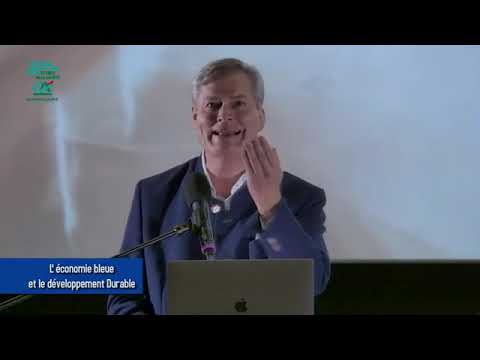
Ecological innovation in practice – Gunter Pauli

How to turn environmental constraints into drivers of innovation, employment, and economic performance? Through the blue economy, Gunter Pauli demonstrates that it is possible to draw inspiration from nature to create frugal, circular, and deeply regenerative models.

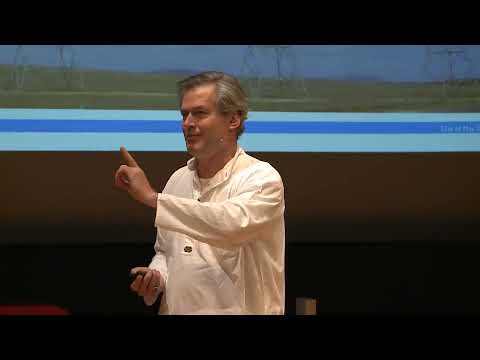
TEDxTaipei – Gunter Pauli: Innovate like nature

In this talk, Gunter Pauli invites us to rethink innovation by observing natural ecosystems, where nothing is wasted and where each resource finds multiple uses. An inspiring conference to understand how businesses can create value while reducing waste, costs, and their environmental impact.

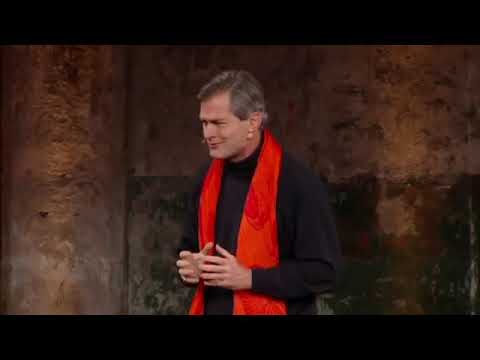
Ecological innovation in practice – Gunter Pauli

Gunter Pauli shows how ecology can become a powerful lever of concrete innovation, capable of creating value from locally available resources. An inspiring intervention to understand how the blue economy transforms waste into opportunities, constraints into solutions, and sustainable models into growth engines.