Skip to Content
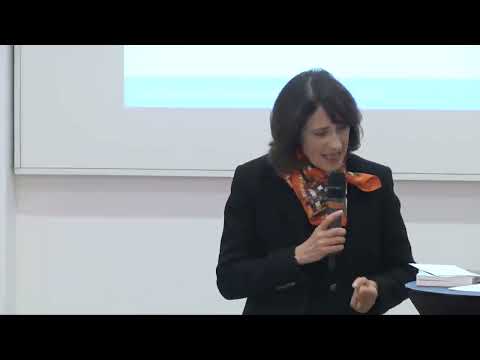
 Catherine Abonnenc

“Catherine Abonnenc transforms critical phases into clear trajectories — with pragmatic, cross-functional, and inclusive leadership. She explores original and eclectic fields of investigation, such as female shareholding or the role of smell in business life.”

Catherine Abonnenc

Speaker · Expert
Catherine Abonnenc is a leading executive and speaker in transition management and strategic leadership. An expert in organizational transformations, change management, and influence communication, she is, alongside her executive roles, an investor and president of Women Business Angels until 2024. She works to strengthen the role of women in investment and shareholding by developing concrete financial education and decision-making programs. Her pragmatic and inclusive approach equips leaders and teams to accelerate transitions, establish cross-functionality, and bring forth a new generation of leaders.

Catherine Abonnenc

Catherine Abonnenc is a recognized figure in the field of transition management and strategic leadership and governance. With a rich career of experiences, she has held leadership positions in renowned companies, where she has successfully implemented innovative strategies to support organizational transformations. Her expertise extends to change management, influence communication, and supporting leaders in making strategic decisions.

Alongside her management activities and as a corporate director, Catherine Abonnenc is a speaker, addressing topics related to leadership, business transformation, managerial innovation, diversity, and governance. She shares her expertise through inspiring conferences, where she highlights the challenges and opportunities of the contemporary professional world. Her pragmatic approach and commitment to equal opportunities make her an influential voice in the fields of management and entrepreneurship.

Her commitment is not limited to companies: she is also involved in the associative world, notably in alumni networks and women's networks. She collaborates with various organizations to develop training and mentoring programs, thus contributing to the emergence of a new generation of leaders.

Today, Catherine Abonnenc continues to inspire and support professionals in their evolution, putting her expertise to service to transform organizations and develop talent. Her journey illustrates a constant will to innovate and create a positive impact on the business world.

Contact with Us

Contacting us for more information or for requesting a speaker.

How to approach change management in a company?

  • · Change is an essential step in the life of a business, but it can often encounter internal resistance. Catherine Abonnenc supports leaders and their teams by identifying the main obstacles to change. She highlights the deep-rooted reasons for the blocks and proposes a personalized approach to effectively overcome them.
  • · One of the key aspects of her method is based on the involvement of employees. She emphasizes the importance of transparent communication and a secure framework to encourage adherence to new practices. A well-led change relies on a clear and shared vision, allowing everyone to project positively into the future.
  • · The tools and strategies offered by Catherine Abonnenc include organizational transformation methods tailored to the specific needs of each business. She advocates for a structured support process in several stages, integrating motivational levers and skill development to facilitate the transition.
  • · Finally, she addresses the issue of leadership during change, explaining how leaders can embody transformation and inspire their team. By adopting a proactive and caring posture, they ensure a successful transition and create an environment conducive to innovation and growth.

How to succeed in your transition management?

  • · Transition management is an effective approach to meet the rapid transformation needs of a company. Catherine Abonnenc explores this model in detail, highlighting its strategic advantages and the necessity to respect each step to ensure smooth integration.
  • · She explains that the first phase is the initial diagnosis, an essential step to identify challenges and define an appropriate action plan. Objectives must be clear and measurable to ensure coherent and effective implementation. This phase also allows for alignment of expectations among stakeholders and ensures informed decision-making.
  • · The core of transition management relies on the expertise of the temporary leader. Catherine Abonnenc emphasizes the importance of structured steering, where the transition manager plays a central role in driving change. They act as a catalyst by mobilizing teams around a clear and engaging vision.
  • · Finally, she addresses the closure of the mission and the handover. Successful transition management leaves behind a consolidated structure, with optimized processes and strengthened governance. The goal is to ensure effective continuity and ensure the sustainability of improvements made.

How to establish cross-functionality in a company?

  • · Cross-functional management is a modern approach that energizes collaboration between different departments, without direct hierarchical relationships. Catherine Abonnenc highlights the benefits of this method, which promotes organizational agility and optimizes project coordination.
  • · It starts by defining the foundations of cross-functional management, explaining how it improves the fluidity of exchanges and stimulates innovation. This approach relies on effective communication, where each actor actively contributes to achieving common goals.
  • · One of the essential points she addresses concerns the role of the cross- functional manager. The latter must be a facilitator, able to rally teams around a positive and collaborative dynamic. Catherine Abonnenc shares practical methods to reinforce this posture, notably by developing skills in negotiation and conflict management.
  • · Finally, she explores the challenges of cross-functional management, such as managing resistance and the need for precise coordination. To succeed with this approach, she recommends suitable management tools and leadership strategies that promote engagement and accountability among teams.

How to invest in startups and become a business angel?

  • Investing in startups offers major opportunities for both individuals and businesses. Catherine Abonnenc presents the fundamentals: understanding investor profiles, analyzing the market, and defining a clear strategy.
  • She explains how to select startups by evaluating the quality of the team, the robustness of the business model, and the growth potential, all while emphasizing the importance of sustained support. She then reviews the main funding methods – venture capital, crowdfunding, and business angels – and provides guidelines for building a balanced portfolio.
  • Beyond financing, she details the role of the Business Angel: providing expertise, networks, and mentoring to entrepreneurs, helping them structure their development and make the right strategic decisions.

How to make governance a sustainable performance element?

  • Compliance with an increasingly complex regulatory environment, mastery of heightened and diversified risks: cybercrime, geopolitics... strategic issues: transmission, appointment of leaders, digital transformation, value creation...
  • Corporate governance must keep pace with society, even anticipate it and evolve continuously.
  • Catherine Abonnenc recalls the fundamentals of corporate governance, its history, its laws and codes, and shows through concrete examples of best practices how good governance adapted to the company's culture contributes to its performance.

How to expand your female network?

  • · Women's networks play a major role in the development of businesses and access to professional opportunities. Catherine Abonnenc offers a detailed approach to structuring and optimizing one's network.
  • · She begins by explaining the importance of women's networking and its impact on business growth. These communities allow businesswomen to support each other and access valuable resources.
  • · She then details the strategies for effectively integrating these networks. Active engagement, participation in events, and creating partnerships are key elements to maximize the benefits of networking.
  • · Finally, she addresses the performance issues related to women's networks. These structures promote the sharing of expertise and provide an environment conducive to innovation and the skills development of members.

How to develop female shareholding?

  • Parity in governance bodies has made significant progress in recent years and is now the subject of strong public attention. However, an equally critical dimension remains largely in the shadows: parity in capital ownership.
  • Female shareholding remains a real blind spot in gender equality within companies and in the economy, especially as financial power is primarily determined by capital ownership.
  • This conference first provides a clear overview: what is the actual presence of women among shareholders — in large listed companies, SMEs, mid-sized firms, and startups — and why are the data so difficult to obtain? It highlights a lack of transparency that prevents a full measurement of the extent of the imbalance.

The place of smell in business life!

  • In this talk, Catherine Abonnenc explores a sense that has been largely overlooked in the world of work: smell. Long relegated to the background in our Western societies, this sense nevertheless plays a crucial role in our emotions, behaviors, and relationships.
  • Beyond the sensory experience, smell can become a true managerial lever for leaders concerned with the well-being of their teams, the quality of human interactions, and collective efficiency in professional life.
  • She first shows how smell has been historically forgotten and sometimes despised in our culture, in favor of sight and hearing, which are less directly linked to our emotions and memory. She then highlights the deeply personal, complex, and singular dimension of this sense, which is now at the heart of new scientific research that renews our understanding of human behavior.
  • Finally, she reveals that smell is a still largely underestimated lever of influence in the business world: olfactory environments can, often without our awareness, guide our decisions, perceptions, and professional relationships.
https://snip.ly/hd3ffa

How to overcome resistance to change

How to overcome resistance to change: diagnosing the barriers, creating a shared vision, and establishing communication rituals to engage teams. Operational tools (indicators, quick wins, sponsors) to secure execution and sustain the transformation.

The keys to successful transition management!

The keys to successful interim management : from the initial audit to the handover, with governance, measurable objectives, and execution cadence. The interim manager acts as a catalyst, structures the processes, and leaves a consolidated organization.

Establish cross-functionality!

Establish cross-functionality to break down silos: clarified roles, smooth coordination, and a culture of cooperation. Methods and tools (RACI, OKR, feedback) to manage tensions and align stakeholders around common goals.