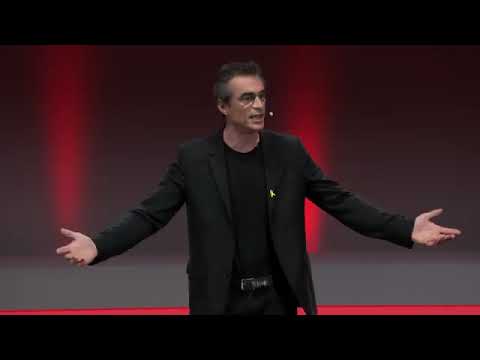
“Raphaël Enthoven: philosophy as a compass to illuminate our collective and individual choices.”
Raphaël Enthoven
Speaker
·
Philosopher
Philosopher, teacher, and essayist, Raphaël Enthoven has established himself as one of the leading voices of philosophical dissemination in France. Former producer of Nouveaux Chemins de la connaissance on France Culture and columnist on Europe 1, he dissects contemporary dilemmas with the help of great thinkers: work, ethics, transformation, artificial intelligence. A sought-after speaker, incapable of being boring, driven by the idea that "no one has the right to bore an audience that has done nothing to them," he offers both businesses and the general public a lucid, accessible, and stimulating perspective on today's issues.
Raphaël Enthoven
Raphaël Enthoven est issu d'une famille d'intellectuels — son père, Jean-Paul Enthoven, est éditeur et sa mère, Catherine David, journaliste — il grandit entouré de livres et de débats. Après des études au lycée Montaigne puis en classes préparatoires au lycée Henri-IV, il intègre l'École normale supérieure de la rue d'Ulm en 1995. Il soutient ensuite une maîtrise sur Leibniz, un DEA sur le nihilisme et obtient l'agrégation de philosophie en 1999.
Dès 2002, il participe au lancement de « Philosophie Magazine » (Gallimard) et y tient la rubrique « Sens et vie », rassemblée en trois recueils : « L'endroit du décor », « Le philosophe de service » et « Matière Première ». En 2007 paraît son premier livre, « Un jeu d'enfant – la philosophie » chez Fayard, à mi-chemin entre essai et autofiction. Sur les ondes de France Culture, il construit de 2003 à 2006 une « bibliothèque orale » dans l'émission Commentaires, puis produit et anime jusqu'en 2011 « Les Nouveaux chemins de la connaissance » : une heure quotidienne de philosophie, littérature et histoire de l'art. En 2012, il lance « Le Gai Savoir ».
At the same time, he taught philosophy at Lyon III, Paris VII–Jussieu, Sciences Po, Polytechnique, and created the Normandy Society of Philosophy. From 2015 to 2018, he appeared on Europe 1 in "The Morality of Information" and "Who Lives?" Winner of the 2013 Fémina Essay Prize for his Amorous Dictionary of Marcel Proust (Plon/Grasset), he is now one of the major voices of philosophical dissemination in France.
Happiness at work: bringing meaning back to the professional experience
- Happiness at work has become a buzzword, omnipresent in management speeches but rarely questioned in its true sense. Raphaël Enthoven begins with a simple and disturbing question: what exactly are we talking about when we talk about happiness? Is it comfort, the absence of conflict, recognition, or something more demanding like the sense of usefulness and personal coherence? By invoking Aristotle, Camus, and a few contemporary illusions, he dismantles slogans to return to the essentials.
- The conference shows that professional discomfort often arises from a misunderstanding: work is asked to make us happy, whereas it can only offer conditions for the possibility of happiness. This shift creates frustration, cynicism, or disengagement. Conversely, understanding what work can — and cannot — provide allows for a reconciliation of requirement, lucidity, and sustainable engagement.
- Raphaël Enthoven then explores the levers that encourage involvement: the meaning of tasks, the pride of a job well done, sincere recognition, but also the right to disagree and complexity. He shows why the pursuit of performance never replaces the pursuit of meaning, and how some organizations confuse motivation with pressure.
- The conference concludes with simple guidelines that managers and teams can immediately mobilize. Without a miracle recipe or imposed morals, it restores work to its rightful place: neither existential savior nor mere constraint, but a space where one can, sometimes, feel up to oneself.
Trust and risk: the art of deciding without certainty!
- Trust is one of the most invoked and least understood words in the professional world. It is demanded, measured, and proclaimed... all while seeking to eliminate any risk. Raphaël Enthoven immediately presents a fundamental paradox: without risk, there is no trust. To believe in someone, to delegate, to cooperate, is always to accept a measure of uncertainty.
- Drawing on the philosophies of Epicurus, Kierkegaard, and very concrete situations in organizational life, he shows why generalized mistrust costs more than accepted risk. Too many procedures, too much control, and too much fear of mistakes ultimately destroy what they claim to protect: engagement, responsibility, and initiative.
- The lecture then analyzes the invisible mechanisms of trust: what strengthens it, what erodes it, and especially what makes it collapse suddenly in times of crisis. Raphaël Enthoven highlights the decisive role of speech, recognition of mistakes, and consistency between words and actions.
- Finally, he proposes a pragmatic reading of trust as a lucid strategy, rather than a naive gamble. Participants leave with a deeper understanding of their own decision-making practices, and with clear principles to establish a solid climate of trust, even—and especially—when everything is not controllable.
Change without breaking: understand resistance to transform better!
- Resistance to change is often seen as a problem to be eliminated. Raphaël Enthoven takes the opposite view of this received idea: resisting is not necessarily refusing to move forward; it is often an attempt to remain consistent. The conference begins with a philosophical and historical perspective on change, showing that inertia is a human constant, not an organizational anomaly.
- He then demonstrates why so many transformations fail: not due to lack of energy, but due to an excess of moralizing discourse. When change is explained with guilt-inducing messages — "you must adapt," "you must be agile" — it achieves the opposite effect of what is intended. Resistance then becomes a form of protection against a poorly understood or poorly formulated project.
- Raphaël Enthoven invites us to shift our perspective: instead of fighting resistance, we must listen to it. What does it express? A legitimate fear, a loss of meaning, a strategic inconsistency? By reframing objections rather than disqualifying them, the organization transforms oppositions into sources of insight.
- The conference concludes with a strong idea: a successful transformation is not one that happens quickly, but one that does not betray. Changing without breaking is about accepting the time of doubt, clarifying meaning, and building adherence based on intelligence rather than directive.
Leadership and Critical Thinking: Becoming an "Internal Philosopher"
- In a world that values speed and certainty, doubt is often seen as a weakness. Raphaël Enthoven turns this perspective on its head: doubt is not the enemy of decision-making; rather, it is the condition for solidity. This conference redefines leadership not as an accumulation of answers, but as the ability to ask the right questions.
- Drawing inspiration from Socrates and contemporary studies on cognitive biases, he shows how our decisions are often guided by invisible automatons: conformity, overconfidence, fear of losing face. The role of the leader then becomes that of a "guardian of questioning," capable of slowing down just enough to avoid costly mistakes.
- The conference explores several concrete situations: strategic trade-offs, reputation crises, unpopular decisions. Each time, critical thinking emerges as a tool for collective protection, allowing us to distinguish what is urgent from what is important, and what is obvious from what is true.
- In conclusion, Raphaël Enthoven offers simple practices to establish a culture of fruitful doubt: meetings guided by open questions, post-decision debriefs, the right to question again. A more demanding leadership, but also fairer and more robust.
Ethics & CSR: building a livable responsibility!
- Ethics is often invoked when all is well and forgotten when decisions become difficult. Raphaël Enthoven reminds us that ethics begins precisely where perfect solutions do not exist. This conference places responsibility at the heart of action, away from moralizing speeches and communication postures.
- Through contemporary dilemmas — environment, personal data, inclusion, economic performance — he shows that ethics is not an opinion, but a method for deciding without self-deception. Choosing always means renouncing, and the challenge is not to be blameless, but coherent.
- The conference helps to distinguish compliance, morality, and responsibility. Abiding by the rules is not enough to be responsible, just as proclaiming great values is not sufficient. What matters is the ability to publicly assume one's choices, explain the criteria behind them, and accept the consequences.
- Raphaël Enthoven concludes with a demanding yet liberating vision of ethics: not as a hindrance to action, but as its condition of credibility. A compass for lasting, rather than a veneer to seduce.
Artificial Intelligence: Innovating without losing the human touch!
- Artificial intelligence fascinates because it mimics our most visible abilities: language, creativity, analysis. Raphaël Enthoven begins with an essential clarification: calculating is not thinking, predicting is not understanding. This distinction allows us to move beyond both naïve enthusiasm and catastrophic fear.
- The conference then analyzes what AI actually changes in work: acceleration, automation, delegation of decisions. It highlights the invisible risks — biases, opacity, dependence — that emerge precisely when technology works "too well".
- Raphaël Enthoven then poses the central question: what must we refuse to delegate? Deciding, judging, healing, sanctioning, creating? Where AI excels in optimization, humans remain irreplaceable in responsibility and meaning.
- The conference concludes with clear principles for responsible use of AI: human control, transparency, traceability, acknowledged limits. A lucid reflection for innovating without dehumanizing.
Happiness at Work: A Philosophical Perspective
Raphaël Enthoven explores the notion of professional happiness through Aristotle and Camus, and questions our organizational models. A lively reflection to give meaning back to work.
Risk and Trust: The Paradoxes of Decision-Making
Based on concrete examples and philosophical references, Raphaël Enthoven shows why trust always involves a certain level of risk. A useful lesson for organizations in transformation.
Change, resist, innovate: a philosophical reading
This conference deciphers resistance to change by placing it within a historical context of ideas, from Prometheus to Schumpeter. Raphaël Enthoven offers practical tools to turn inertia into a driver of innovation.
Artificial Intelligence: Machine vs Human Thought
Between fascination and concern, Raphaël Enthoven questions what distinguishes man from the algorithm. A reflection on ethics, creativity, and the future of intelligence.